


From the north · Wildlife
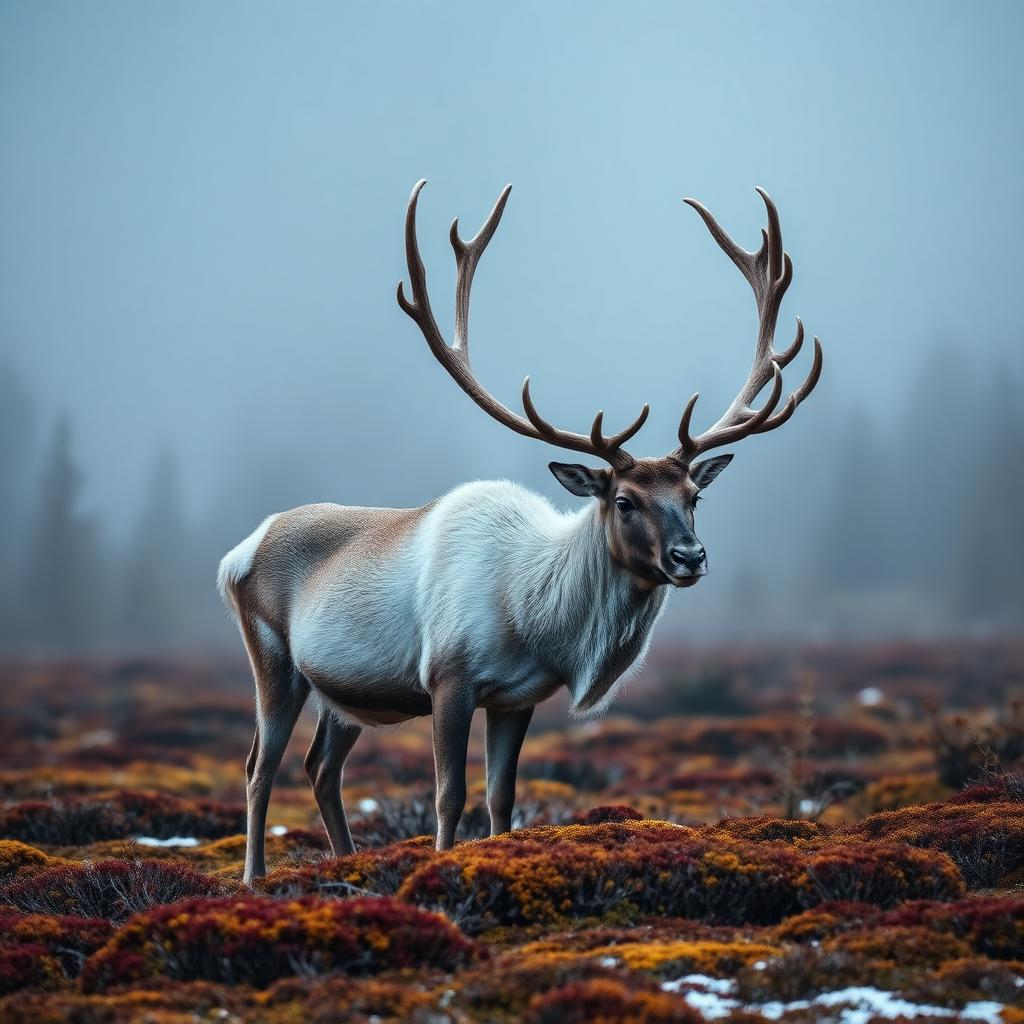
Woodland caribou
The boreal cousin of tundra caribou — a lichen-eating, old-growth specialist and one of the most imperiled large mammals on the continent.
Rangifer tarandus caribou
- Weight
- 240–700 lb (110–320 kg)
- Shoulder height
- 3.5–4.5 ft
- Lifespan
- 10–15 yr wild
- Antlers
- Both sexes carry antlers
- Winter food
- Ground and arboreal lichens
- Group size
- Small — 2 to 30, not big migratory herds
- Calves
- 1 calf/yr, born late May–early June
- Status
- Threatened / endangered across most of range
Why old forest matters
Woodland caribou depend on mature and old-growth conifer forest for arboreal lichens — a food that takes 80+ years to grow back after fire or logging. Cut it and caribou don't come back on human timescales. This is the fundamental reason woodland caribou are collapsing across their southern range and thriving nowhere that industry has arrived.
The predator problem
Roads, seismic lines, and cutovers create moose and deer habitat where there wasn't any. More ungulates support more wolves. Wolves, hunting shared trails, then find caribou. The cascade — habitat change to shared predator — is the main driver of decline, not direct hunting. Recovery programs that only cull predators without protecting old forest fail every time.
Calving strategy
Cows drop single calves in late May–early June, often on isolated islands, muskeg, or high alpine plateaus specifically to escape wolves. A calf can stand within an hour and travel with the mother within a day. The first two weeks are the highest-mortality window of the animal's life; a calf that survives to July has a real chance.
What you'll see in the field
Cratering in the snow where they've dug down to lichen. Cloven tracks the size of a moose calf's, with rounded lobes. Small groups moving slowly through mature spruce, never in the open panic-herds you'd see with barren-ground caribou. In fall rut, listen for the low grunting of bulls tending small harems.
Reading the tracks
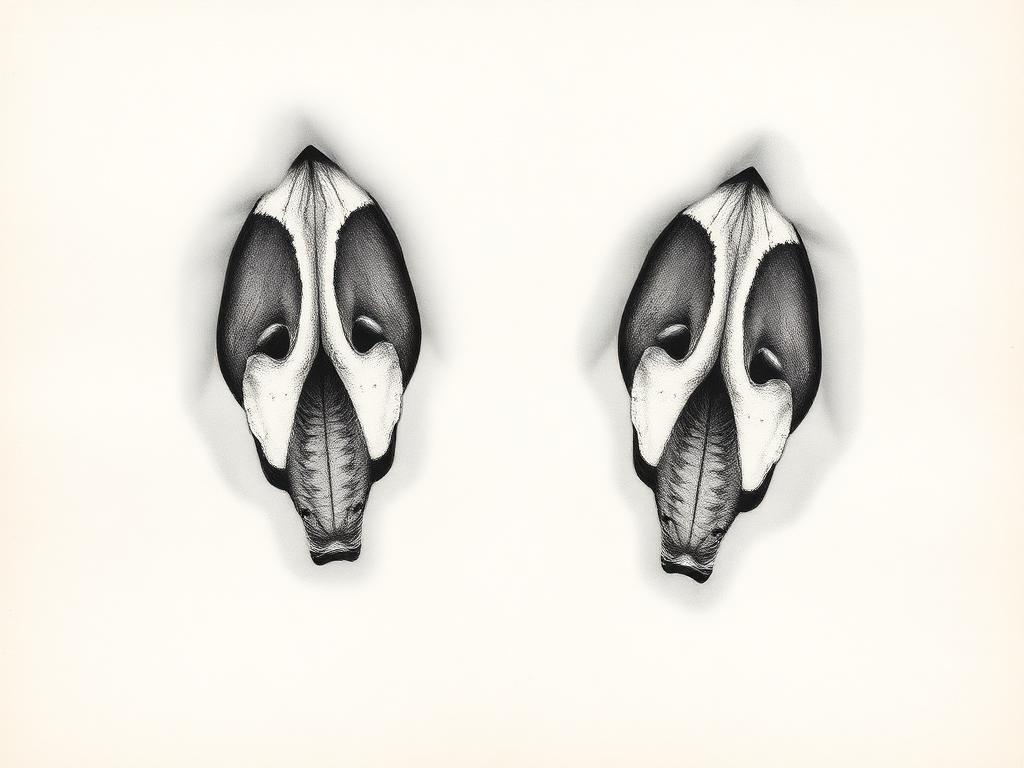
How to identify woodland caribou sign
- Size
- 4–6 in long, nearly as wide as long — bigger than a moose calf, similar to a small cow
- Gait
- Walking or slow trot through mature spruce; dewclaw dots often register in soft snow
- Best substrate
- Old snow with a soft crust, or bog and lichen mat in summer.
What to look for
Two wide, rounded crescent-shaped halves that splay outward — the classic snowshoe hoof. Look for cratering nearby where they've dug through snow to reach ground lichen.
Don't confuse with
Moose (larger, more pointed and heart-shaped) and deer (much smaller, narrower).
Male vs. female
How to tell a male from a female
Male
Bulls are noticeably larger (400–700 lb) with massive, palmated antlers that sweep forward — including a distinctive forward-projecting brow tine (the 'shovel') over the face. In fall rut, bulls develop a thick white mane and a swollen neck.
Female
Cows are smaller (240–400 lb) and are the only deer species in which females also carry antlers — but the rack is much thinner, shorter, and less branched, often just a simple beam with a few points. Cows keep their antlers through winter (bulls drop theirs after rut), which helps them defend feeding craters from bulls when calories matter most.
At a distance
In mid-winter, the animals still carrying antlers are almost all cows. In September–October, a large-antlered animal with a white mane grunting at a small group is a rutting bull. A single adult with a small calf close by from June through fall is a cow with her calf of the year.
Field notes
- A single set of caribou tracks in mature spruce, no roads within miles, is the sign of an intact system.
- Never chase a group to photograph. Winter energy budgets are already the tightest line they walk.
- A calving cow alone on an island in June should not be pushed off the island by paddlers — she chose it for a reason.
Plan around this species
Where this matters in planning
Caribou are a legal, high-value big-game animal in much of the North. Plan the shot, the pack-out, and the meat care before the season opens.
- Build Your 10
Plan for a rifle or bow, a knife you can process an elk-sized animal with, and meat bags.
- Clothing Builder
Quiet, scent-controlled layering for long, cold sits.
- Field Builds
See kit lists other hunters have used in comparable country.
- Field Dressing Big Game
Gutless method, quarter and bone-out for long pack-outs.
- Useful Fauna Knowledge
Rut timing, migration, and how to read a herd.
- Shelters
Spike camps you can strike quickly to follow animals.