


From the north · Wildlife
Wolverine
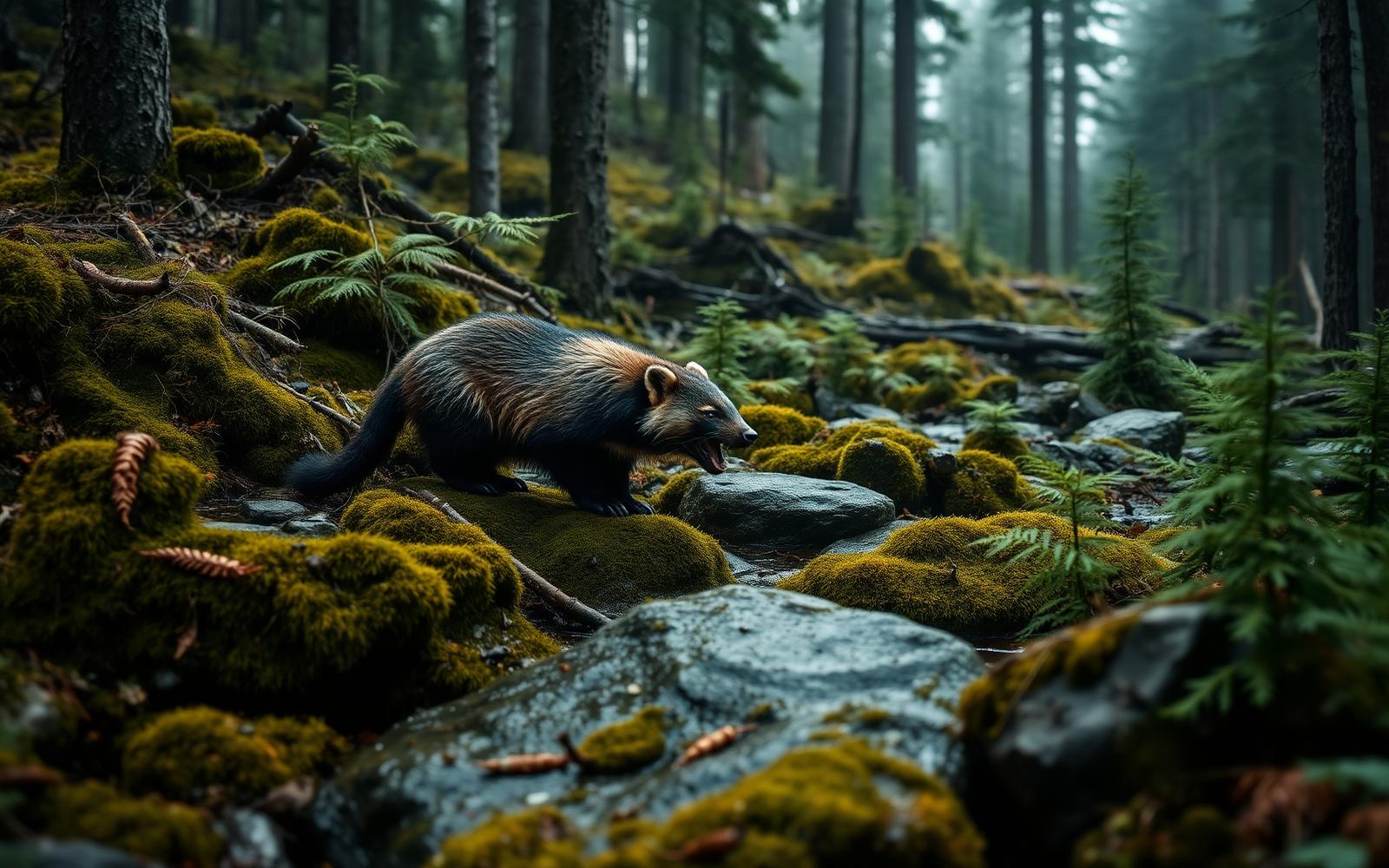
The largest land weasel — small on the scale, huge on attitude, unmatched at moving through wild snow country.
Gulo gulo
- Weight
- 20–55 lb (9–25 kg)
- Length
- 26–34 in body, plus bushy tail
- Lifespan
- 7–12 yr wild
- Home range
- 100–600+ sq mi
- Diet
- Carrion, small mammals, ungulates, birds
- Density
- ≈1 wolverine per 60–200 sq mi
- Kits
- 1–4 every 2 yr, born Feb–Mar in snow den
- Range
- Boreal & alpine N. America, N. Eurasia
The scavenger that hunts
Wolverines will steal a caribou kill from a wolf pack, cache meat under snow, then return for months. They also actively hunt — running down hares in deep powder that stops most predators, and occasionally taking down winter-weakened ungulates far larger than themselves. The jaw and teeth are built to crack frozen bone; almost no other predator can eat what a wolverine can.
Snow specialists
Females den in deep, persistent spring snow to raise kits — usually under downed logs or in avalanche debris where the snowpack lasts into May. Warming winters shorten that window and shrink habitat from the south up. The wolverine's future is a snowpack question as much as a wilderness question.
The traveling life
A male wolverine may cover 15–30 miles a day on patrol. They cross drainages, alpine passes, and glaciers other carnivores route around. Trail cameras on high passes routinely show the same wolverine days apart on both sides of a mountain range. This is why viable populations need enormous connected wilderness.
Encounters
Almost nobody sees one. Sign is the tell: 5-toed tracks with a distinctive lope pattern, chewed carcasses cached under logs or snow, and heavy musk on scent posts. Give them their carcasses and their space — a wolverine on a cache will not back down, and its bite through leather boots is a real problem.
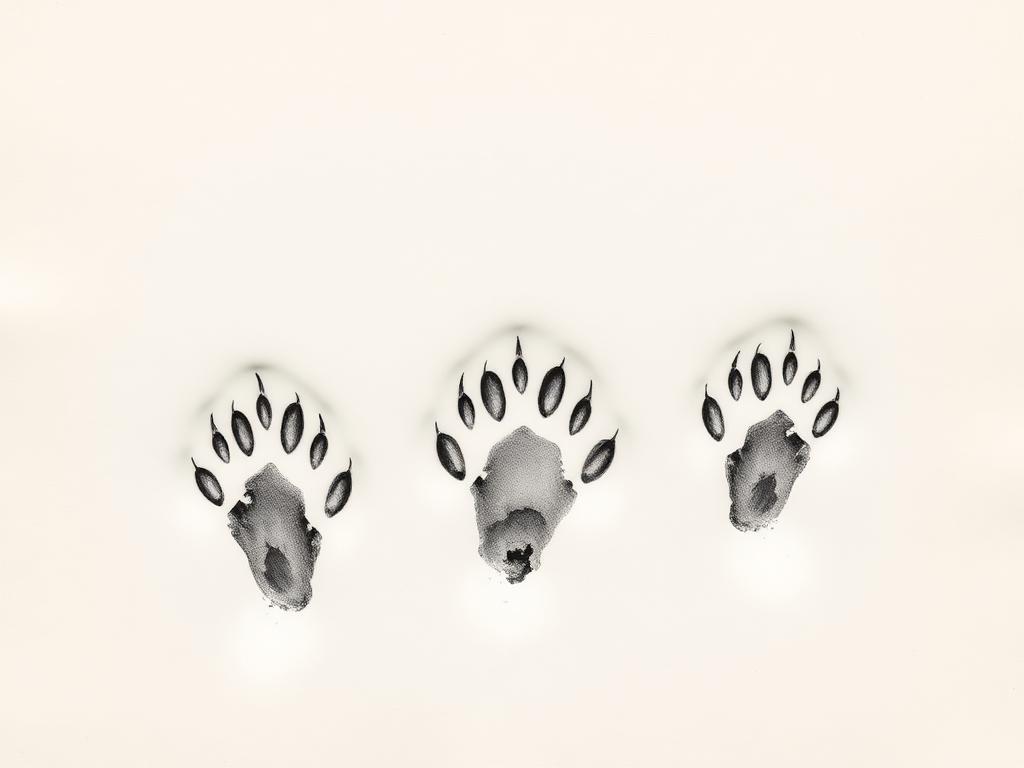
Reading the tracks
How to identify wolverine sign
- Size
- Print 4–7 in long including claws; lope stride 20–40 in
- Gait
- 3-print lope — the classic all-four-feet-clustered bound repeating across country for miles
- Best substrate
- Fresh snow at treeline or on frozen alpine ridges.
What to look for
Five toes with small claws, a wide chevron-shaped rear pad, and a distinctive three-print (sometimes two-print) lope that eats terrain. Trails run straight over things most animals go around.
Don't confuse with
Fisher (smaller, similar shape but half the size) and lynx (round, no claws, walking gait).
Male vs. female
How to tell a male from a female
Male
Males are 30–40% heavier than females (typically 30–55 lb), with a larger, more squared head, thicker neck, and a broader chest. Scent-marking behavior is more frequent — expect musk-rubbed logs and scratched trees along a patrolling male's route.
Female
Females are noticeably smaller (17–30 lb) with a finer head and shorter legs relative to body. In spring, a denning female stays close to the natal den in deep-snow terrain and rarely lopes long distances until kits are moving with her by June.
At a distance
Almost all sightings are single animals — pairs only overlap briefly during the summer mating window. A wolverine bounding hard across a ridge in mid-winter is most often a male on patrol; a slower-moving adult with 1–3 kits in early summer is a female with her litter of the year.
Field notes
- A 3-print lope pattern in fresh snow — bounding, all four feet clustered — is classic wolverine.
- Cached kill sites smell like a musky, sweet dead thing under the snow. Move on.
- A wolverine bounding out of sight over an alpine pass is often the only view anyone ever gets — good enough.
Plan around this species
Where this matters in planning
Wolverines almost never confront people, but they will destroy an unattended cache or trap line. Plan how you leave gear behind.
- Build Your 10
Add a hatchet, snare wire, and a compact fish/trap kit if you plan to live off the land.
- Gear categories
Compare traps, snares, and fishing tackle.
- Camp Craft
Cache food and gear beyond a wolverine's reach and patience.
- Useful Fauna Knowledge
Trap-line etiquette and sign recognition.
- Bushcraft Tools & Weapons
Trap security in country with mustelids.