


From the north · Wildlife
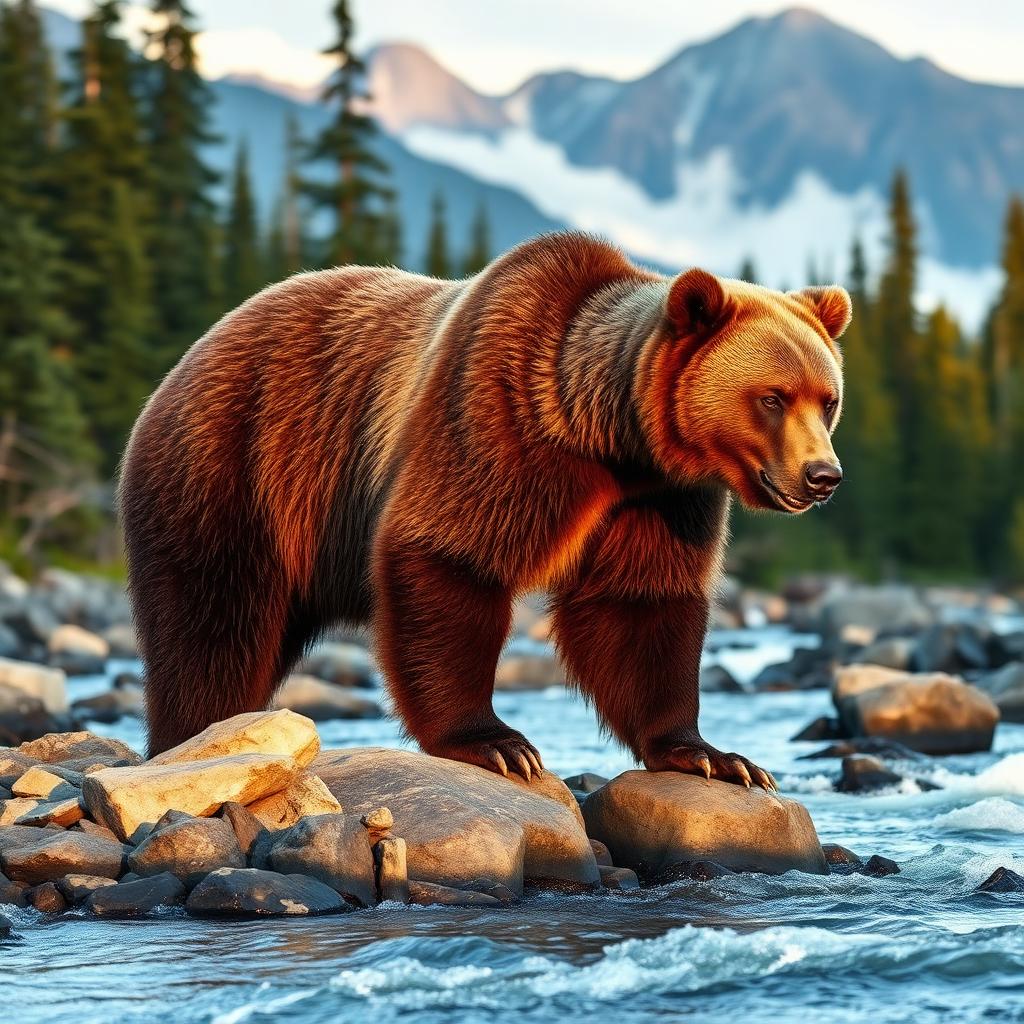
Grizzly bear
The North American brown bear — bigger, more open-country, and a whole different response protocol than a black bear.
Ursus arctos horribilis
- Weight
- 300–1,500 lb (135–680 kg)
- Shoulder height
- 3.5–4.5 ft on all fours
- Lifespan
- 20–30 yr wild
- ID marks
- Shoulder hump, dish face, long front claws
- Diet
- Salmon, roots, berries, ground squirrels, ungulates
- Home range
- 50–600+ sq mi
- Cubs
- 1–4 every 3–4 yr, born January in den
- Range
- Alaska, western Canada, N. Rockies, Eurasia
Grizzly vs. black bear
Color doesn't tell you — behavior and profile do. Grizzly: shoulder hump higher than rump, dish-shaped face, small round ears, long light-colored front claws that leave clear dots ahead of the toe pads. Black bear: no hump, straight face profile, tall ears, short dark claws that often don't register in prints. A cinnamon black bear and a blond grizzly can look almost identical in color — always read profile and claws.
If a grizzly charges
Bear spray at 25–30 feet is the tool that works. If a grizzly makes contact in a defensive encounter — usually a surprised sow with cubs or a bear on a carcass — play dead, face down, hands laced behind your neck, legs spread, pack on. Fight back only if the attack becomes predatory (silent, prolonged, tent-borne) or if the bear starts feeding on you. Ninety percent of defensive attacks end within seconds if you don't struggle.
Country to expect them
Salmon streams, berry benches, ungulate calving grounds, avalanche chutes greening up in spring, and open sedge meadows in coastal Alaska. Always announce yourself in brush and never approach a carcass upwind. A single wingbeat of a raven circling low is often the first sign of a bear on a kill.
Digging and roots
The shoulder hump is a massive slab of muscle that powers the front legs for digging — grizzlies dig out ground squirrels, glacier lilies, hedysarum roots, and marmots in ways black bears cannot. Fresh excavations the size of a bathtub, with roots torn out and rocks flipped, are diagnostic grizzly sign in alpine and subalpine country.
Denning and cubs
Grizzlies dig dens on north-facing slopes at 6,000–9,000 ft, entering in October–November and emerging April–May. Cubs are born blind in January weighing under a pound. Females delay reproduction until 5–8 years old and only breed every 3–4 years, which is why grizzly populations recover so slowly from any pressure.
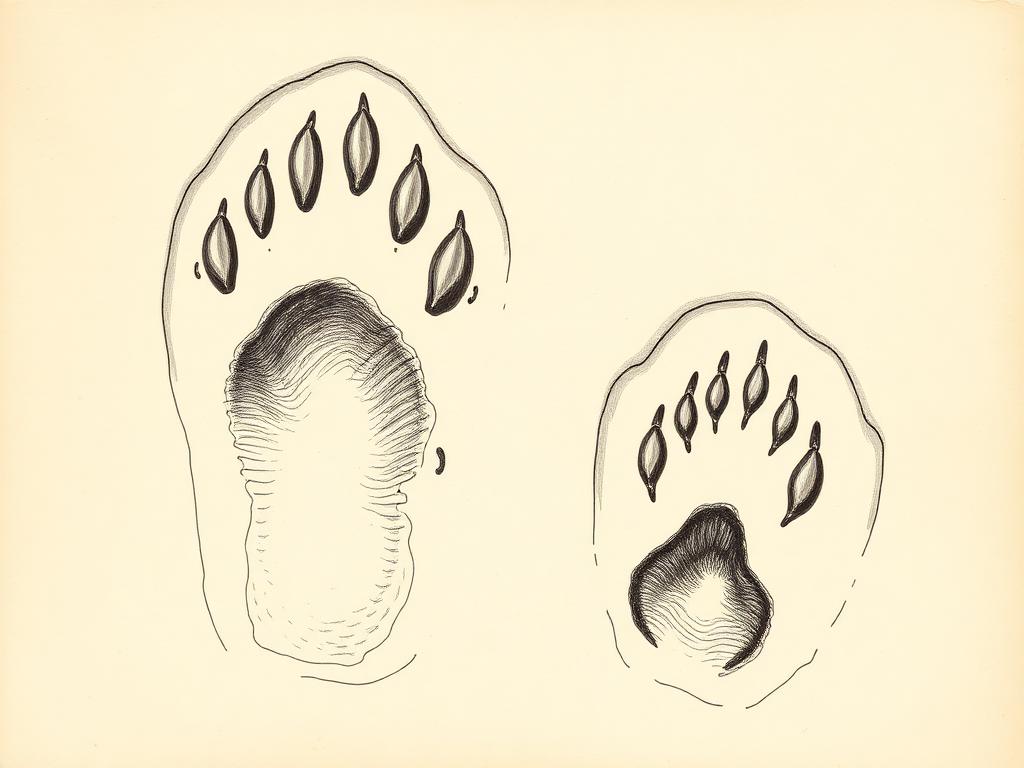
Reading the tracks
How to identify grizzly bear sign
- Size
- Front 5–7 in wide; hind 8–13 in long — noticeably larger than a black bear
- Gait
- Overstep walk — hind print often lands ahead of the front on the same side
- Best substrate
- Wet river mud below salmon streams, or sedge meadow soil in spring.
What to look for
Long claw dots register 2–4 in ahead of the toe pads — always. Toes sit in a nearly straight line across the top of the front pad, not the shallow arc of a black bear.
Don't confuse with
Black bear (short claws close to toes, toes in an arc) — if you have to ask, treat it as grizzly and act accordingly.
Male vs. female
How to tell a male from a female
Male
Boars are enormous — 500–1,500 lb in prime coastal habitat, roughly twice the mass of sows. Massive head, thick neck, heavily scarred muzzle and shoulders, and a blockier, more muscular hump. Boars travel alone and dominate the best fishing rocks.
Female
Sows are 250–600 lb with a more refined head and a visible neck. In summer they are almost always with cubs (spring cubs, yearlings, or two-year-olds). A protective sow is the single most dangerous grizzly encounter in North America.
At a distance
On a salmon stream, the biggest bears on the prime rocks are boars. Any bear with cubs of any age is a sow — give her 200+ yards no matter what she looks like. In spring, a lone bear on an ungulate carcass is almost always a boar; a bear with cubs on a carcass is a sow and is many times more dangerous.
Field notes
- Long claw dots 2–4 in ahead of the toe pads in mud is a grizzly track — always.
- Bear spray beats a handgun in every study of real encounters — carry it accessible, not buried.
- A dug-up alpine hillside with hedysarum roots torn out and rocks flipped is fresh grizzly work; do not stay for photos.
Plan around this species
Where this matters in planning
In grizzly country, camp layout and food storage are not optional. Plan bear spray on-body, hard-sided food storage, and a firearm posture appropriate for your route.
- Build Your 10
Add bear-hang cord, food storage, and a defensive tool to your ten essentials.
- Clothing Builder
Pick layers that don't retain food smells and let you move quietly at dawn and dusk.
- Gear categories
Compare bear canisters, spray holsters, and hard-sided food storage.
- Camp Craft
Cook 100+ yards from sleep. Every time.
- Shelters
Avoid brushy salmon/berry corridors when siting camp.
- Useful Fauna Knowledge
Recognize a defensive vs. predatory encounter.
- Bushcraft Tools & Weapons
Spray + heavy sidearm/long gun considerations.