


From the north · Wildlife
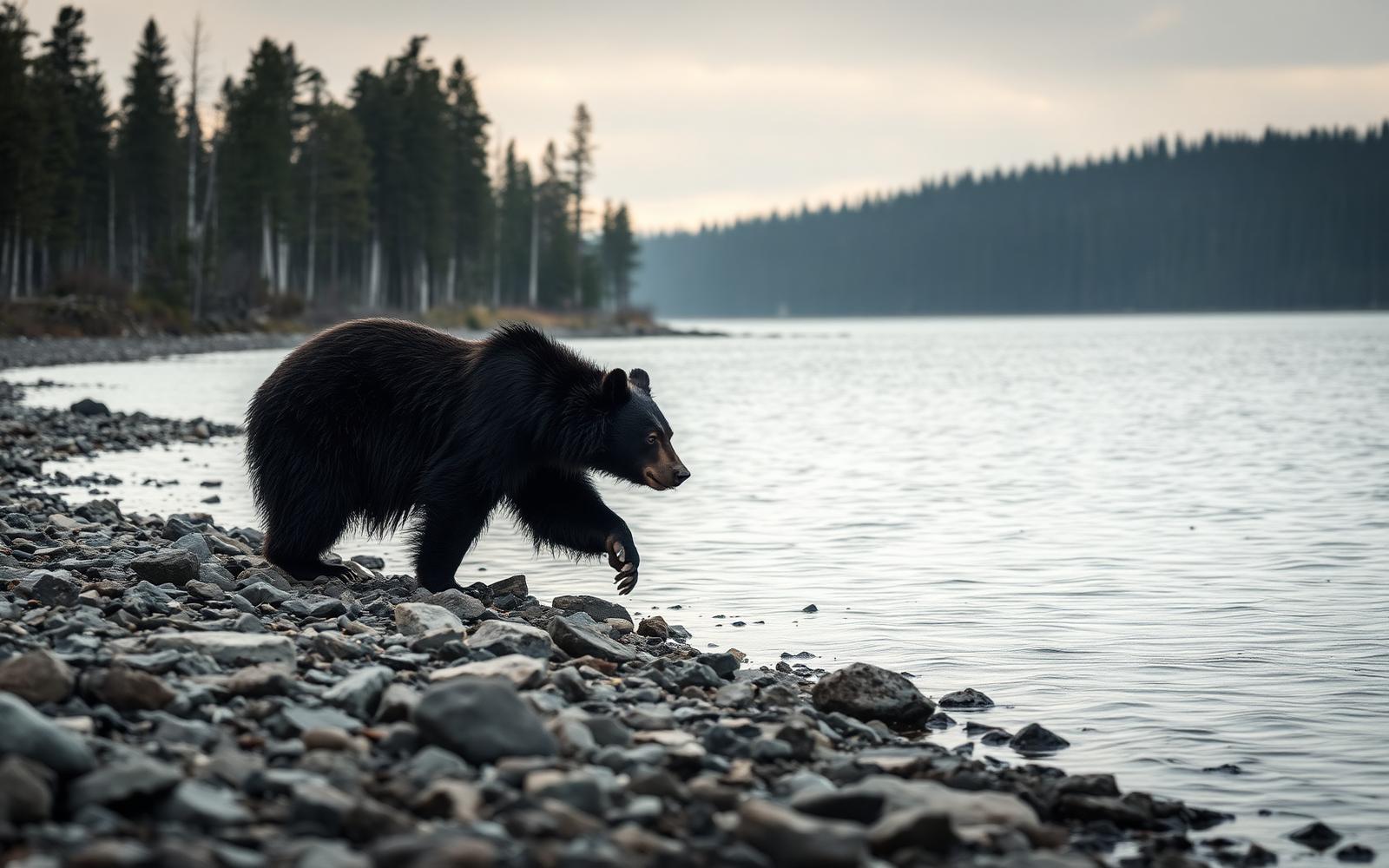
Black bear
The most widespread bear in North America — a shy, food-driven opportunist you will absolutely share the woods with.
Ursus americanus
- Weight
- 150–600 lb (70–270 kg)
- Shoulder height
- 2.5–3 ft on all fours
- Lifespan
- 18–25 yr wild
- Color
- Black, cinnamon, blond, blue-gray
- Diet
- ~85% plants, berries, nuts, insects, carrion
- Home range
- 10–250 sq mi
- Cubs
- 1–4 every 2 yr, born January in den
- Range
- Most of forested North America
Behavior at camp
Black bears are neophobic — new smells, new shapes, new sounds usually push them away, unless food has trained them otherwise. A camp that never rewards a visit stays boring; one that leaves grease on the ground trains the next bear that comes through. Bears never forget a food source: a cabin robbed once will be checked every spring for a decade.
Bluff vs. real charge
Bluff charges are common: huffing, jaw-popping, front-paw slaps, then breaking off. Real predatory approaches are silent, direct, and unhurried. Stand your ground, look big, make noise, and fight back if a black bear actually makes contact — do not play dead. Black bear predatory attacks are rare and almost always by lone males in low-food years.
Denning and cubs
Black bears den from October–April depending on latitude. Females give birth in January inside the den to blind, hairless cubs weighing under a pound. The cubs nurse on rich fat-based milk for months without the sow eating or drinking. Cubs stay with her through their second summer, then are chased off before her next breeding cycle.
Food storage
Hang food 12+ ft up and 6+ ft from any trunk, or use an approved bear canister. Cook and store food 100+ yards downwind of your sleep site. Sleep in clean clothes, not the ones you cooked in. Toothpaste, sunscreen, lip balm, and bacon grease all count as food.
Seasonal rhythm
Spring bears are lean and grass-focused. Summer bears eat everything from ant colonies to spawning suckers. Fall bears are in hyperphagia — 20,000+ calories per day, focused on berry patches and mast crops. Late-fall encounters at berry benches are the highest-risk window because bears are food-obsessed and slow to leave a productive patch.
Reading the tracks
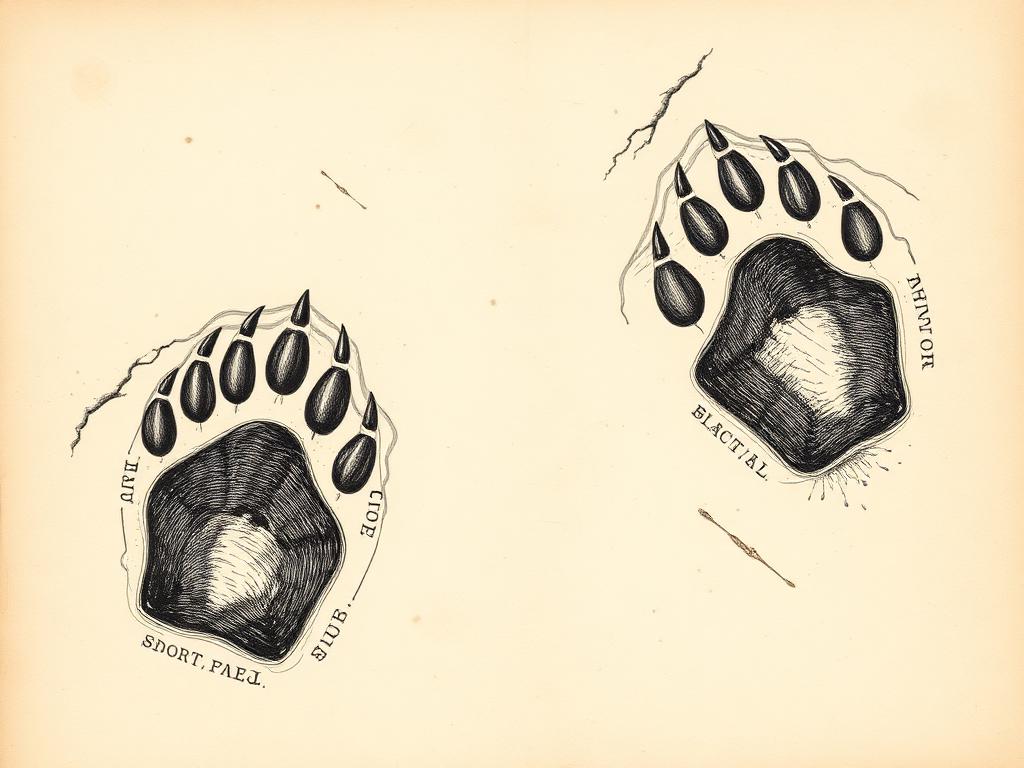
How to identify black bear sign
- Size
- Front 4–5 in wide; hind 5–7 in long — much smaller than a grizzly
- Gait
- Flat-footed shuffle; hind print often overlaps or lands slightly behind the front on the same side
- Best substrate
- Damp trail dust, creek mud, and old snow along berry benches.
What to look for
Five toes in a shallow arc across the top of the pad, with short claw marks close to (or missing behind) the toes. Hind print resembles a small barefoot human print.
Don't confuse with
Grizzly (bigger, straighter toe line, long claw dots well ahead). If claws register 2+ in ahead of the toes, it's not a black bear.
Male vs. female
How to tell a male from a female
Male
Boars are 40–60% heavier than sows (typically 250–600 lb), with a massive blocky head, thick neck matching or exceeding the head width, and a scarred muzzle from years of fighting. They travel alone.
Female
Sows are smaller (150–250 lb) with a proportionally narrower head, longer-looking muzzle, and a neck clearly thinner than the head. In summer a sow is almost always accompanied by 1–4 cubs of the year or yearlings.
At a distance
The reliable at-distance tell is company: a bear with cubs is a sow, always. A large solitary bear crossing a road or working a berry patch alone in June is almost certainly a boar. In profile, a boar's head looks glued onto the shoulders; a sow's head sits on a visible neck.
Field notes
- Tracks: 5 toes in a shallow arc, no claw marks in soft mud (grizzly shows long claw dots well ahead of toes).
- A pile of shredded stumps and ant-cavity mining is classic black-bear feeding sign.
- Bear scat full of berry seeds and blue-purple in color means you're on a fresh food source — reroute.
Plan around this species
Where this matters in planning
Black bears are the animal most likely to enter camp. Almost every incident is a food-storage failure. Plan food, cooking, and firearm access as one system.
- Build Your 10
Add bear-hang cord, food storage, and a defensive tool to your ten essentials.
- Clothing Builder
Pick layers that don't retain food smells and let you move quietly at dawn and dusk.
- Gear categories
Compare bear canisters, spray holsters, and hard-sided food storage.
- Camp Craft
Bear-hang, canister use, cook triangle.
- Shelters
Where to pitch (and not pitch) in black-bear country.
- Useful Fauna Knowledge
Read bear sign before you set camp.
- Bushcraft Tools & Weapons
Bear spray vs. firearm — carry, deploy, practice.