


From the north · Wildlife
Canada lynx
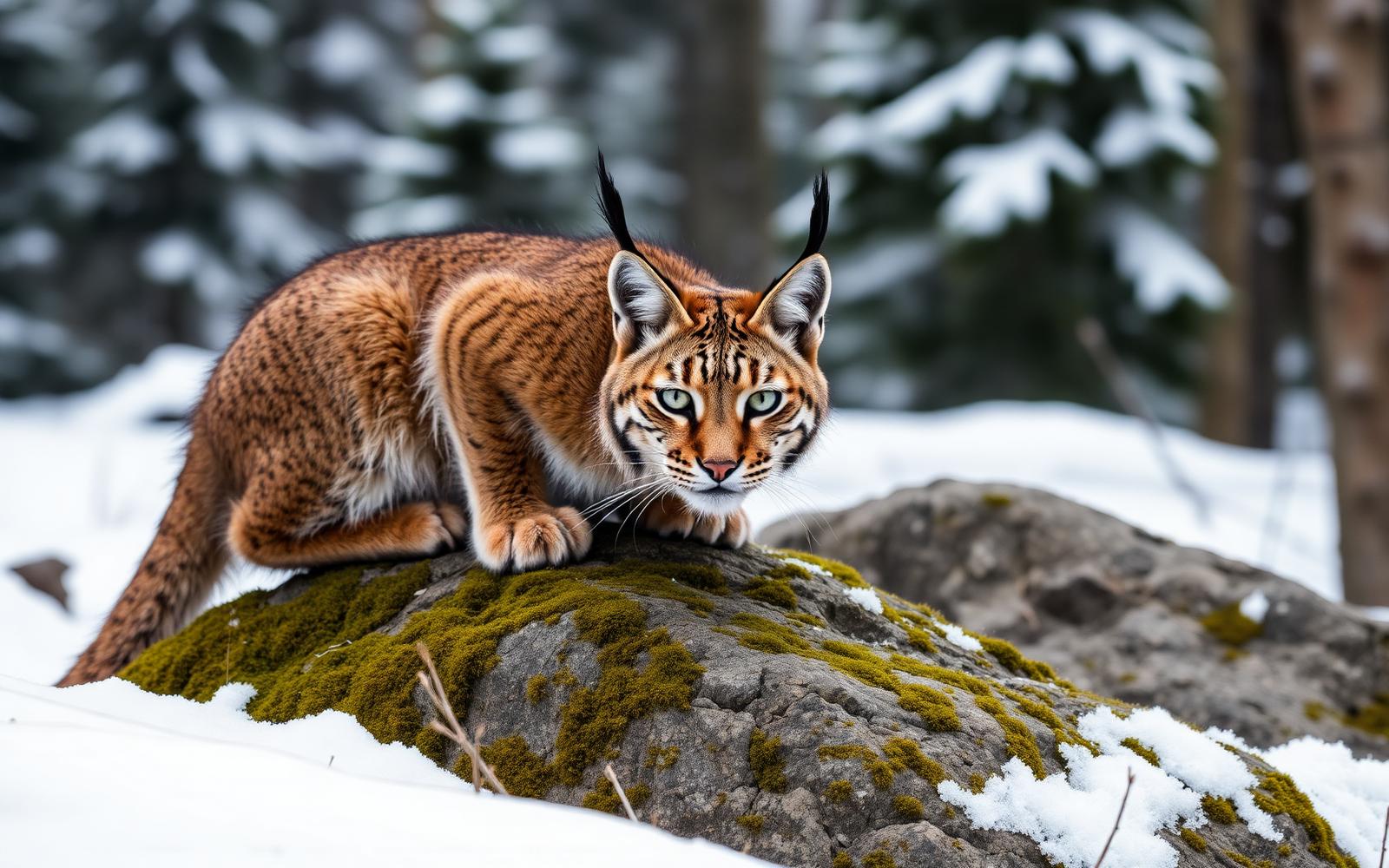
A silent specialist tied to one prey species and one landscape — dense spruce, deep snow, and snowshoe hare.
Lynx canadensis
- Weight
- 18–24 lb (8–11 kg)
- Length
- 30–40 in body, 4 in tail
- Lifespan
- 10–14 yr wild
- Foot size
- Up to 4 in across — natural snowshoes
- Prey
- 60–97% snowshoe hare
- Home range
- 5–100+ sq mi
- Litter
- 1–5 kittens, born late May
- Range
- Canadian boreal, Alaska, northern US mtns
One prey, one landscape
Lynx populations rise and crash on a ten-year cycle that mirrors snowshoe hare abundance. When hares peak, a female may raise 4–5 kittens; when they crash, litters fail entirely, adults starve, and dispersers show up hundreds of miles from typical range. Where you find hare browse, you're in lynx country.
Built for deep snow
A lynx foot spreads to nearly 4 inches across in winter — the wide toe splay and dense foot fur give a foot-loading of about 40 g/cm², roughly a third of a bobcat's. This lets lynx float on powder that stops coyotes and bobcats cold. It's the reason the species survives where it does: south of the deep-snow line, competitors outperform them.
How they hunt
Lynx are ambush hunters. They post up along active hare runways in dense conifer cover, sit for hours, and take the hare with a single short burst. A successful lynx eats one hare per day on average. They rarely chase — a hare in the open outruns a lynx over more than a few seconds.
How to spot one
Assume you won't. Lynx move at dawn and dusk, low and silent, sticking to blowdown, thickets, and shadowed edges. Look instead for round, canid-sized tracks with no claw marks, in fresh snow, near hare runs. Kittens travel with the mother through their first winter — a set of one large and one or two smaller round tracks together is diagnostic.
Why they matter
Lynx are an indicator species for intact boreal forest. Their absence usually means fragmented cover, road density, or a broken hare cycle — all bad signs for the surrounding ecosystem.
Reading the tracks
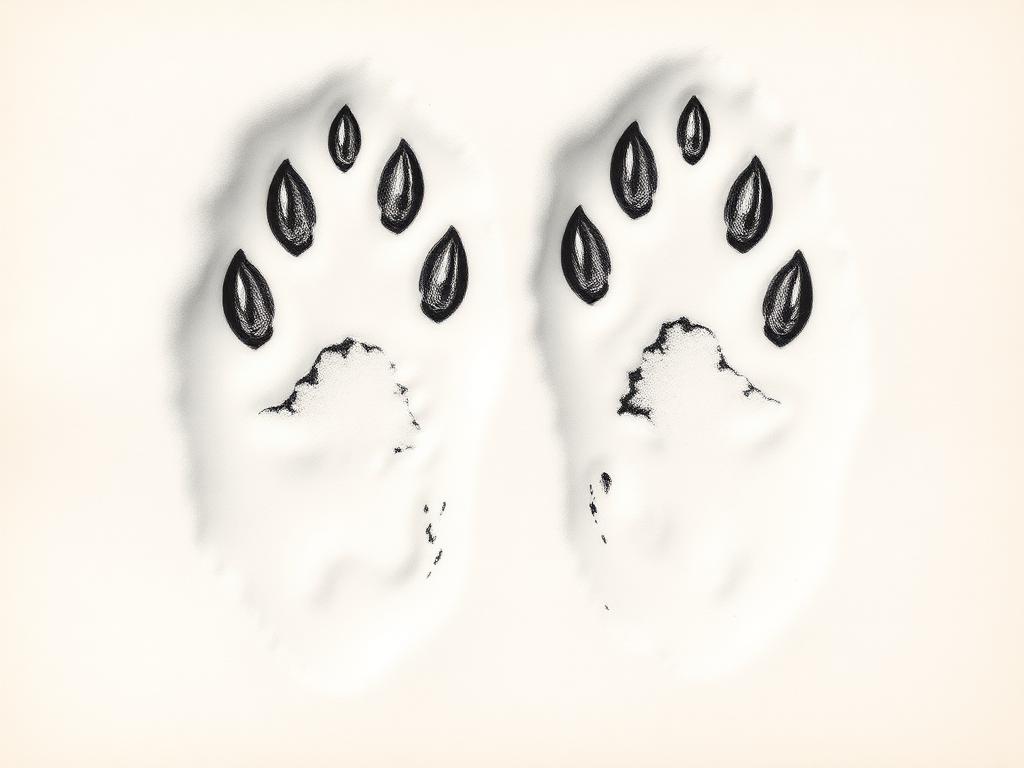
How to identify canada lynx sign
- Size
- Round, up to 4 in across — huge for the animal's weight
- Gait
- Silent direct-register walk; hind foot steps exactly into the front print
- Best substrate
- Fresh dry powder in dense black-spruce cover with active snowshoe hare runs nearby.
What to look for
Big, round, and fuzzy — heavy foot fur softens the pad outline and buries claw marks. Larger than a bobcat, more circular than a wolf, and always no claws.
Don't confuse with
Bobcat (smaller, sharper outline) and cougar (much larger, distinct M-shaped rear pad).
Male vs. female
How to tell a male from a female
Male
Males are about 25% larger (20–30 lb), longer-legged, and often carry a heavier ruff and more prominent black ear tufts. Face appears broader and more square.
Female
Females are smaller (15–22 lb) with a finer face and shorter ruff. In summer, a female with kittens shows visible teats; kittens (spotted, blue-eyed) may travel with her from about 8 weeks on.
At a distance
A lone lynx crossing an opening at speed is usually a male on patrol. An adult with 1–3 smaller cats trailing through the same cover is almost always a female with her kittens of the year.
Field notes
- Track set: round, ~4 in across, no claws, in soft direct-register at a walk.
- Ear tufts and cheek ruffs get thicker in winter — a silhouette test at distance.
- Kitten tracks trailing an adult through mid-winter tell you a den survived the summer.
Plan around this species
Where this matters in planning
Lynx are almost never a human concern, but where you find lynx you find snowshoe hare — the single most reliable small-game calorie in the North.
- Build Your 10
Slot in a small-game tool (22LR, slingshot, snare wire) and a compact game bag.
- Gear categories
Filter to small-game tools, snare kits, and lightweight cordage.
- Useful Fauna Knowledge
Cyclic hare populations tell you what a country will feed.
- Field Dressing Small Game
Turn a hare into food fast, before it freezes solid.
- Bushcraft Tools & Weapons
Snares and .22-class tools for hare country.