


From the north · Wildlife
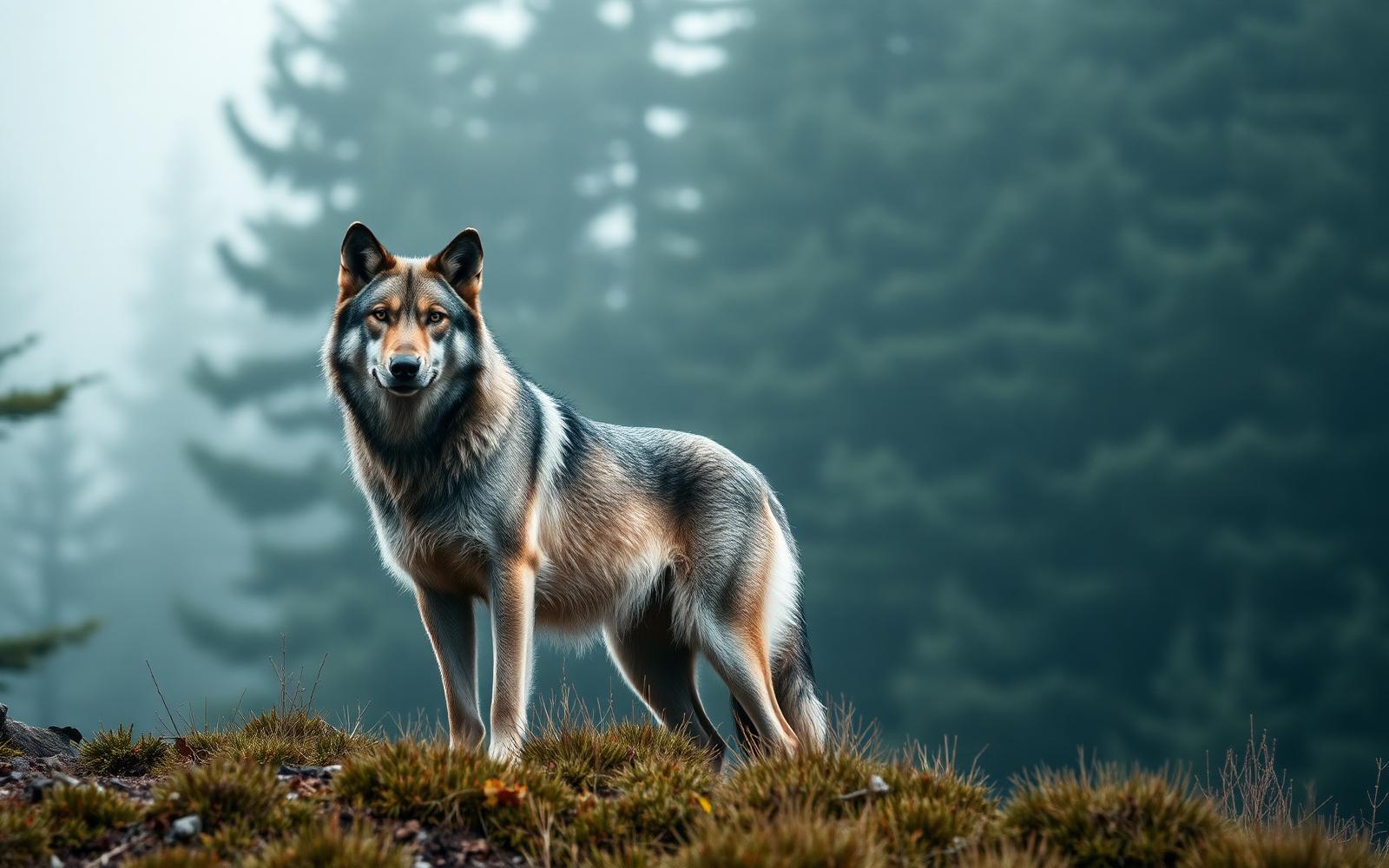
Timber wolf
The apex canid of the boreal — travels far, kills big, teaches everything else in the forest to move quietly.
Canis lupus
- Weight
- 60–120 lb (27–54 kg)
- Length
- 4.5–6.5 ft nose to tail
- Lifespan
- 6–8 yr wild, up to 13 yr
- Territory
- 50–1,000 sq mi per pack
- Group size
- 2–15, usually 5–8
- Prey
- Moose, caribou, deer, beaver, hare
- Breeding
- One litter/yr, only the alpha pair
- Range
- Boreal & sub-arctic N. America, Eurasia
How they hunt
Wolves are cursorial hunters — they wear prey down over miles rather than ambushing. A pack tests dozens of animals for every one it kills; most chases end without contact. In winter they read snow crust, herd fatigue, and terrain funnels the same way a good tracker does. A moose that stands its ground almost always survives; one that runs is usually the one that dies.
Pack structure
A pack is a family: a breeding pair, their pups of the year, and yearlings from previous litters. Only the alpha female breeds, once a year in late winter, denning up in April with 4–6 pups. Yearlings help hunt, guard the den, and regurgitate meat for the pups. Dispersal at 1–3 years old is how new packs form — a young wolf can travel 500+ miles looking for a mate and an empty territory.
Reading the sign
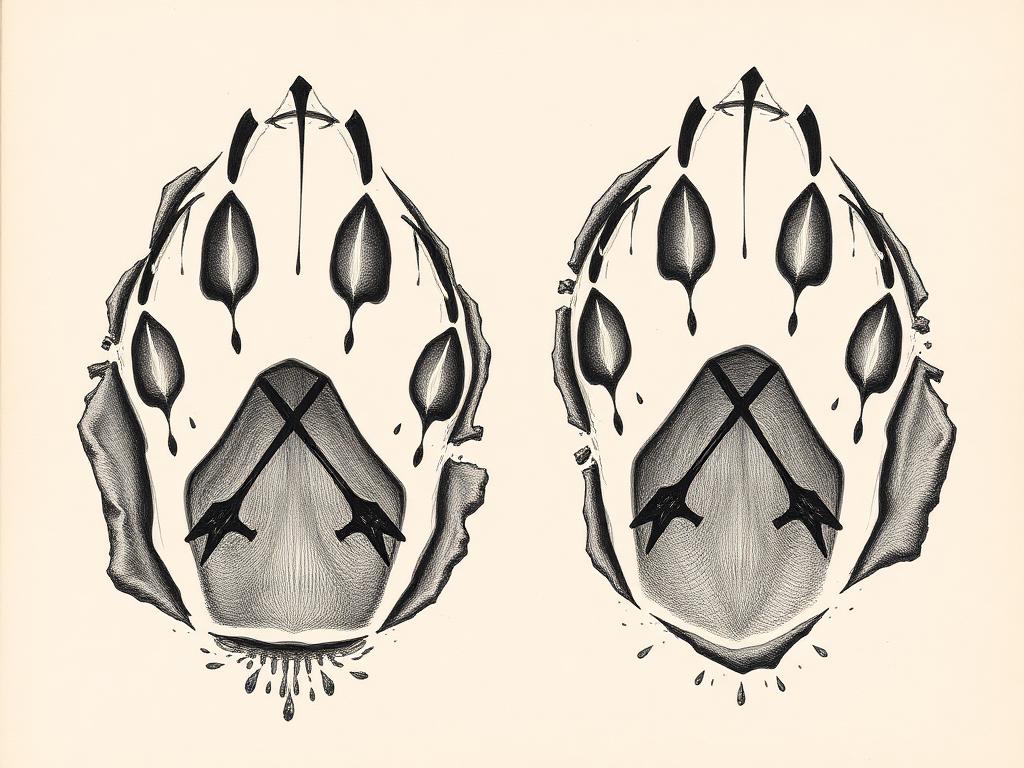
Wolf tracks run 4–5 inches long with claw registration and a clean X between the pads. Trails are efficient — direct-register at a trot for miles. Scat is rope-shaped, hair-and-bone packed, and often placed on trail intersections as territory markers. Scent posts, scratch mounds, and howling all reinforce a pack's claim on a piece of country.
Communication
A wolf howl carries 6–10 miles on a still night. Lone-wolf howls are long, low, and mournful; pack chorus howls slide across octaves and are used for reunion, rally, and boundary defense. Body language — tail height, ear position, hackles — is a full second language inside the pack. Fights are rare; posturing settles almost everything.
Living near them
Wolves almost never approach people. Camp hygiene still matters — hang food, cook away from your sleeping site, and treat curious pack behavior (parallel-walking, watching from cover) as normal, not threatening. Dogs are the real flashpoint; a loose dog in wolf country will often be killed as an intruding canid, not as food.
Reading the tracks
How to identify timber wolf sign
- Size
- 4–5 in long including claws; front slightly larger than hind
- Gait
- Direct-register trot for miles — hind foot lands in the front print, leaving a single efficient line
- Best substrate
- Soft creek mud, wet snow, or fine trail dust — the X shows up cleanest in firm, damp ground.
What to look for
Four toes with clear claw marks, a triangular rear pad, and a clean X-shaped negative space between toes and pad. Trails run straight and purposeful across country.
Don't confuse with
Large dog (splayed toes, wandering trail, no efficient direct-register) and coyote (much smaller, ~2.5 in).
Male vs. female
How to tell a male from a female
Male
Males are 20–25% heavier (typically 85–120 lb), with a blockier head, broader muzzle, thicker neck ruff, and squarer shoulders. In winter coat the cape across the shoulders is more pronounced.
Female
Females are leaner overall (60–90 lb), with a narrower muzzle, more slender chest, and a slightly finer face. Nursing females in spring show visible teats and thinner belly fur.
At a distance
Watch who leads and who scent-marks. The breeding male raises a leg to urinate high; the breeding female squats and scrapes. In a traveling pack, the two largest, most confident animals leading side by side are almost always the alpha pair.
Field notes
- Howls carry 6+ miles on a still winter night. Answer only if you want the pack to relocate.
- Pack scat clustered on a trail junction usually marks a territorial boundary — expect fresh sign nearby.
- A single wolf traveling alone in late winter is often a disperser — hungry, wary, and hundreds of miles from home.
Plan around this species
Where this matters in planning
Wolves rarely threaten prepared campers, but they will investigate food and unattended kills. Plan camp hygiene, sound discipline, and firearm access accordingly.
- Build Your 10
Add bear-hang cord, food storage, and a defensive tool to your ten essentials.
- Clothing Builder
Pick layers that don't retain food smells and let you move quietly at dawn and dusk.
- Gear categories
Compare bear canisters, spray holsters, and hard-sided food storage.
- Shelters
Site camps off game trails and away from carcass sign.
- Camp Craft
Bear-hang, cooking well away from tent, gear organization.
- Useful Fauna Knowledge
Read pack behavior, tracks, and vocalizations.
- Bushcraft Tools & Weapons
Choose a defensive tool and know how it carries.