


From the north · Wildlife
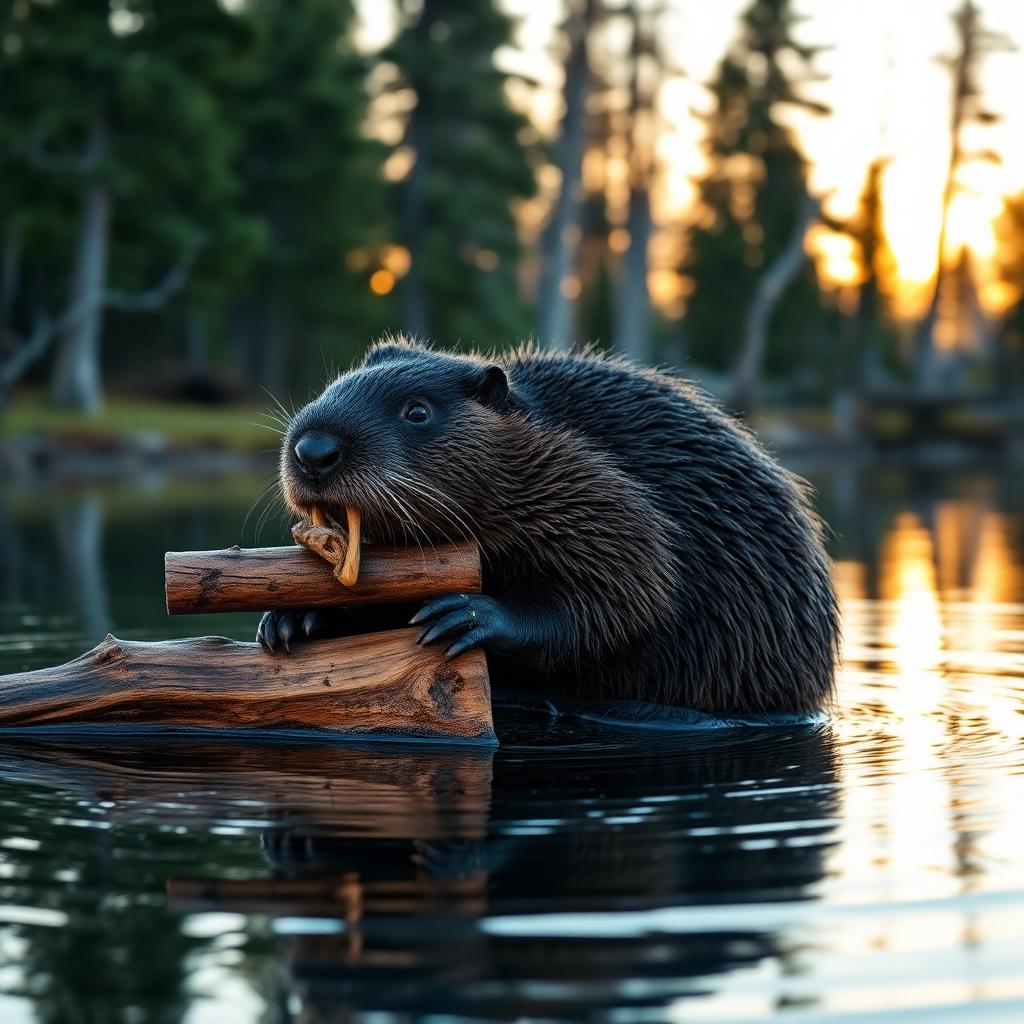
North American beaver
The ecosystem engineer — floods valleys, builds fish habitat, feeds moose, and quietly makes the country wetter, cooler, and more resilient.
Castor canadensis
- Weight
- 35–70 lb (16–32 kg)
- Length
- 3–4 ft including tail
- Lifespan
- 10–20 yr wild
- Dam length
- Typically 20–100 ft; largest known >2,700 ft
- Diet
- Cambium of aspen, willow, birch, poplar; aquatic plants
- Colony
- One breeding pair + kits + yearlings
- Kits
- 2–4 per year, born late spring in the lodge
- Range
- Nearly all of forested North America
What a beaver pond does
One dam raises the water table, cools summer streams, filters sediment, creates fish rearing habitat, drowns willow into moose forage, and refills groundwater. A cascade of dams turns a straight creek into a valley-wide wetland — the single most cost-effective drought and wildfire buffer in most boreal watersheds.
Colony life
A beaver colony is a strict monogamous family: one breeding pair, their kits of the year, and yearlings from the previous litter. Two-year-olds are pushed out each spring and travel overland or downstream, sometimes miles, to find a mate and an empty stretch of creek. Colonies communicate with tail slaps, low nasal grunts inside the lodge, and heavy castoreum scent mounds along the shoreline.
Winter under the ice
In fall the colony builds an underwater food cache — a raft of aspen and willow branches jammed into the pond bottom near the lodge entrance. Once the pond freezes, the entire family lives under the ice for 4–6 months, breathing in the air pocket inside the lodge and swimming out to the cache to eat. A single cache can weigh over a ton.
For a 10-item planner
Beaver country is a whole survival kit. Ponds hold fish. Cut aspen means firewood. The dam itself is a bridge. Lodges tell you which bank freezes hardest. If you're picking a base camp in unfamiliar country, an active beaver flowage is usually the right neighborhood.
Sign to read
Fresh chewed sticks in the water, cone-cut stumps on shore, mud-and-stick lodges 4–8 ft high, and a smooth mud slide from bank to water. A tail-slap alarm at dusk means you're in someone's living room.
Reading the tracks
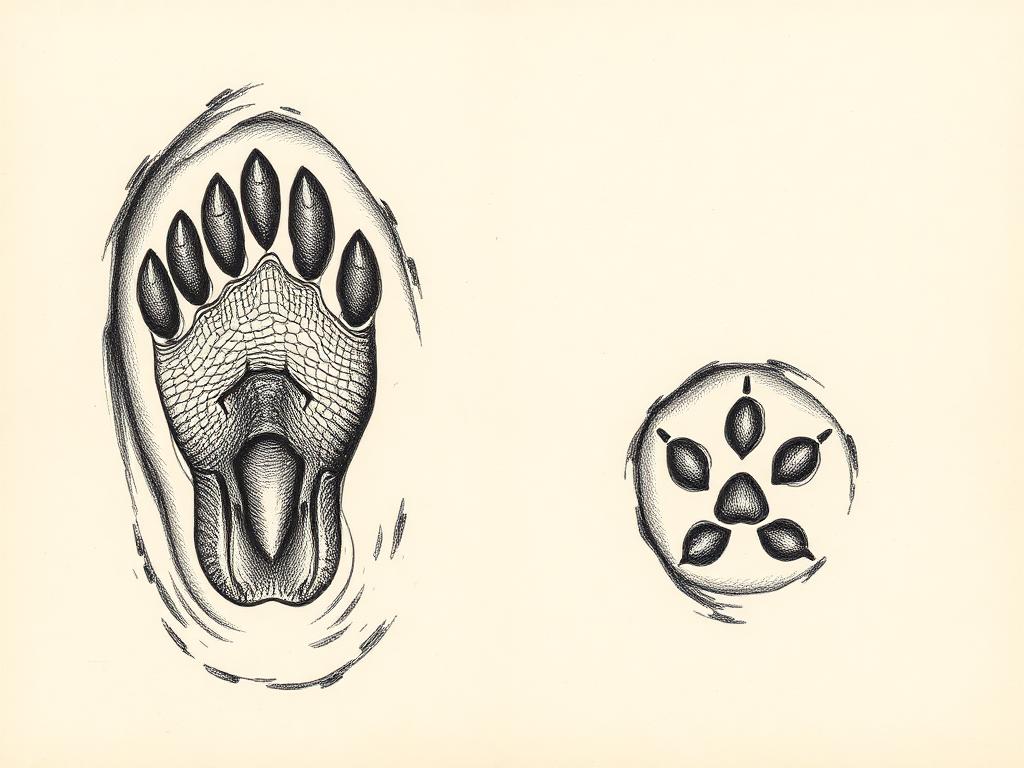
How to identify north american beaver sign
- Size
- Hind foot 5–7 in long, webbed; front paw ~3 in; often a wavy tail drag between prints
- Gait
- Waddling walk from water to a cut tree, then back — short trails with a distinct tail drag
- Best substrate
- Soft mud along pond and creek banks, especially where a slide enters the water.
What to look for
The huge webbed hind print is unmistakable. Pair it with cone-cut aspen stumps, mud slides on the bank, and fresh sticks in the water and you're standing at an active colony.
Don't confuse with
Otter (no webbed print of that size, uses slides), muskrat (much smaller, tail drag is thin and straight).
Male vs. female
How to tell a male from a female
Male
Beavers show almost no external sexual dimorphism — males and females are essentially the same size, shape, and color. Both sexes have a cloaca with no visible external genitalia; even biologists in the hand often need to palpate the baculum (males) or check the color and viscosity of the anal-gland secretion to sex an adult beaver.
Female
Females are typically a hair larger than males (unusual among mammals). In late spring and summer, a nursing female shows enlarged, visible nipples on the chest when she surfaces — the only reliable field cue distinguishing sexes.
At a distance
You cannot sex a beaver in the field with any confidence. Watch instead for the pair: two adults working the same dam and lodge in spring are the breeding male and female. If one animal spends more time close to the lodge and less time out cutting trees, that's usually the female with young kits inside.
Field notes
- The wet mud on a lodge in November means active occupation — the family is inside for the winter.
- Never break a working dam. The pond behind it is the whole reason the valley works.
- A two-year-old beaver waddling overland in June is almost certainly a disperser looking for its own stretch of creek.
Plan around this species
Where this matters in planning
Beavers create the water you camp on and the wood you burn. They're also legal fur and a serious calorie source. Plan around both the animal and the pond.
- Build Your 10
Add a hatchet, snare wire, and a compact fish/trap kit if you plan to live off the land.
- Gear categories
Compare traps, snares, and fishing tackle.
- Field Dressing Small Game
Skin, cape, and butcher a beaver cleanly.
- Shelters
Beaver ponds mean flat ground, dry wood, and drinking water.
- Camp Craft
Water from beaver ponds — filter and treat every time.