


From the north · Wildlife
Spruce grouse
The fool hen — a chicken-of-the-woods so tame it walks past you, and one of the most reliable survival proteins in the boreal.
Falcipennis canadensis
- Weight
- 16–23 oz (450–650 g)
- Length
- 15–17 in
- Lifespan
- 5–8 yr wild
- Male ID
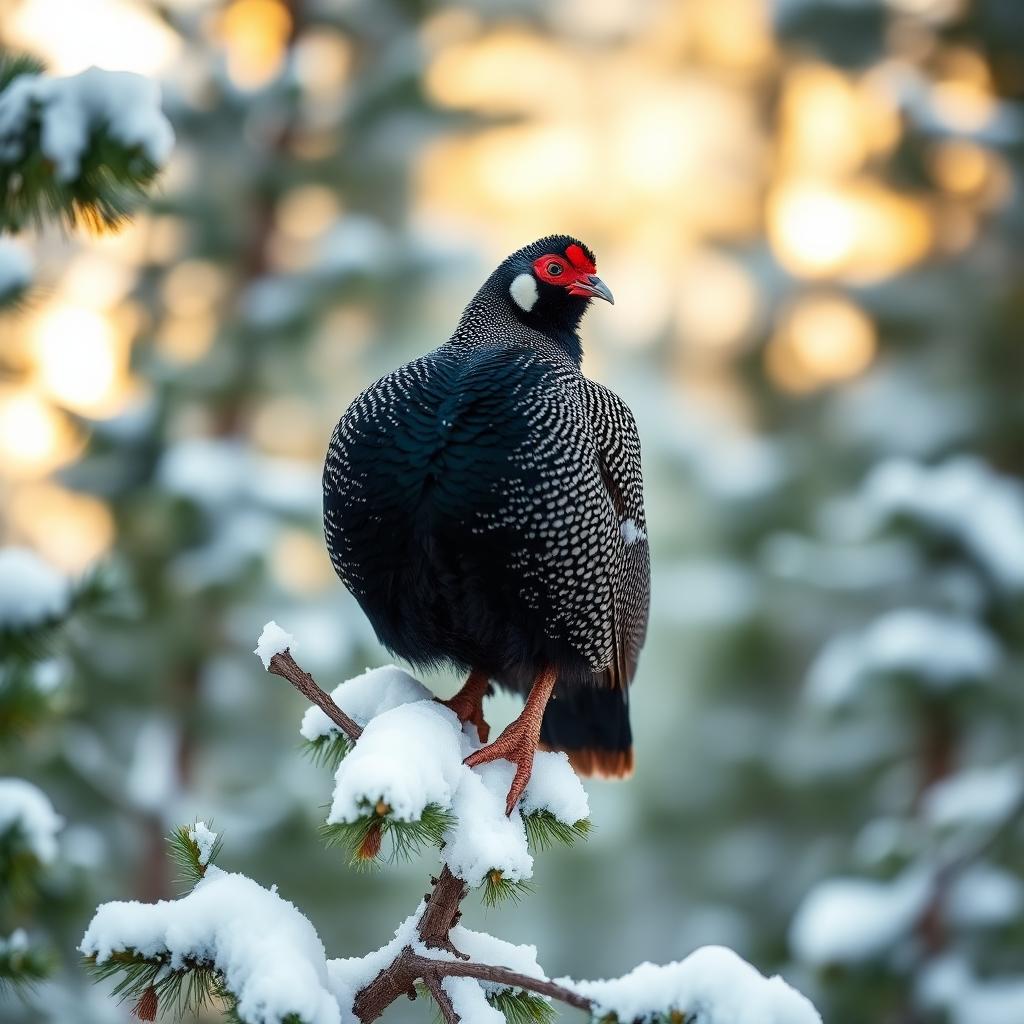
- Black chest, white bib, red eye comb
- Winter food
- Almost entirely spruce and pine needles
- Habitat
- Dense conifer, especially black spruce & jack pine
- Clutch
- 5–10 eggs on the ground, hatch mid-June
- Range
- Boreal forest belt across North America
Why they're so calm
Spruce grouse evolved with few ground predators in dense conifer cover. Their strategy is to freeze, blend in, and let the threat walk past. It works on lynx and hawks. It fails on humans with a stick, which is why the nickname exists — and why they matter to anyone who has ever needed calories 30 miles from the truck.
Where to look
Walk logging roads and game trails through mature black spruce at dawn or dusk. Watch for birds on the ground grit-feeding, or perched motionless three feet above the trail. In winter they roost in dense canopy, often multiple birds per tree.
Winter survival
In deep winter, spruce grouse switch almost entirely to conifer needles — a food no other bird of that size can digest well. Their gut expands 30–40% in fall to handle the fibrous diet. On the coldest nights they plunge into powder snow, tunnel a foot in, and roost inside a snow chamber that stays 20–30°F warmer than the ambient air.
Courtship display
In April and May males claim small display territories in mature conifer. The male fans his black tail, inflates the bright red eye combs, flutter-jumps between the ground and a low branch, and produces a soft double-thump wing clap that carries only 30–40 yards. It's one of the most understated grouse displays in North America — easy to miss unless you're within earshot.
Taking one ethically
Where legal and in season, spruce grouse are a small-game staple. Use a headshot with a .22 or a smooth throw with a stout stick. Leave nesting hens alone in spring. In a genuine survival scenario, take the male first — the drumming/display bird — before pressuring a family group.
Reading the tracks
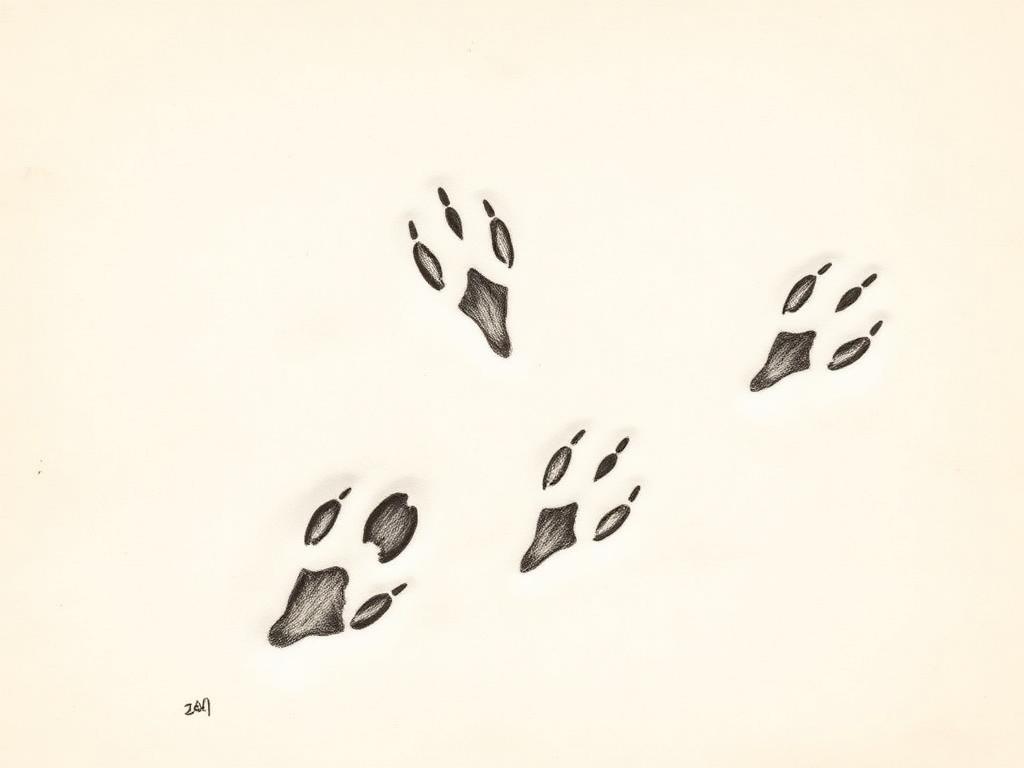
How to identify spruce grouse sign
- Size
- Print ~2 in long; walking stride 4–6 in
- Gait
- Walking — three forward toes with a small hind toe, in a nearly straight line
- Best substrate
- Fresh dusting of snow along logging roads and game trails in mature black spruce.
What to look for
Three splayed forward toes, a faint rear toe, and a short stride. Often paired with fresh green needle scat and shallow snow-roost hollows under conifers.
Don't confuse with
Ruffed grouse (larger, more feathering) and ptarmigan (heavily feathered feet leave a fuzzy, less defined print).
Male vs. female
How to tell a male from a female
Male
Males are unmistakable: slate-black chest and throat, a bright white necklace and belly barring, a black tail with a rusty terminal band, and a bare scarlet comb of skin above the eye that inflates during display. Slightly larger than the female.
Female
Females are cryptic — heavily barred brown, buff, and black plumage that blends into duff and moss. No red eye comb. Two color morphs exist (grey and rufous). A hen sitting tight on a ground nest can be within 3 feet and invisible.
At a distance
Sexing a spruce grouse is easy: any bright chest and red eye combs above the eye means male. A brown, chicken-patterned bird on the forest floor is a hen — and in June and July she may have a string of buff-and-brown chicks trailing her through the moss.
Field notes
- Fresh conifer-needle scat (dry, fibrous, green) under a spruce means a bird was overhead recently.
- A hen with chicks explodes underfoot in summer. Freeze, don't chase, and note the location — she'll be back.
- A snow crater 6–10 in deep with a fresh entry hole and no exit hole is an occupied grouse roost — do not step on it.
Plan around this species
Where this matters in planning
The 'fool hen' is often the difference between a hungry night and a hot meal 30 miles from the truck. Plan a small-game tool you can actually carry every day.
- Build Your 10
Slot in a small-game tool (22LR, slingshot, snare wire) and a compact game bag.
- Gear categories
Filter to small-game tools, snare kits, and lightweight cordage.
- Field Dressing Small Game
Breast a grouse in under a minute.
- Bushcraft Tools & Weapons
Slingshot, .22, or throwing stick — pick one and practice.
- Firebuilding
You need a cook fire, not just a warming fire, to use the calories.