


From the north · Wildlife
Snowshoe hare
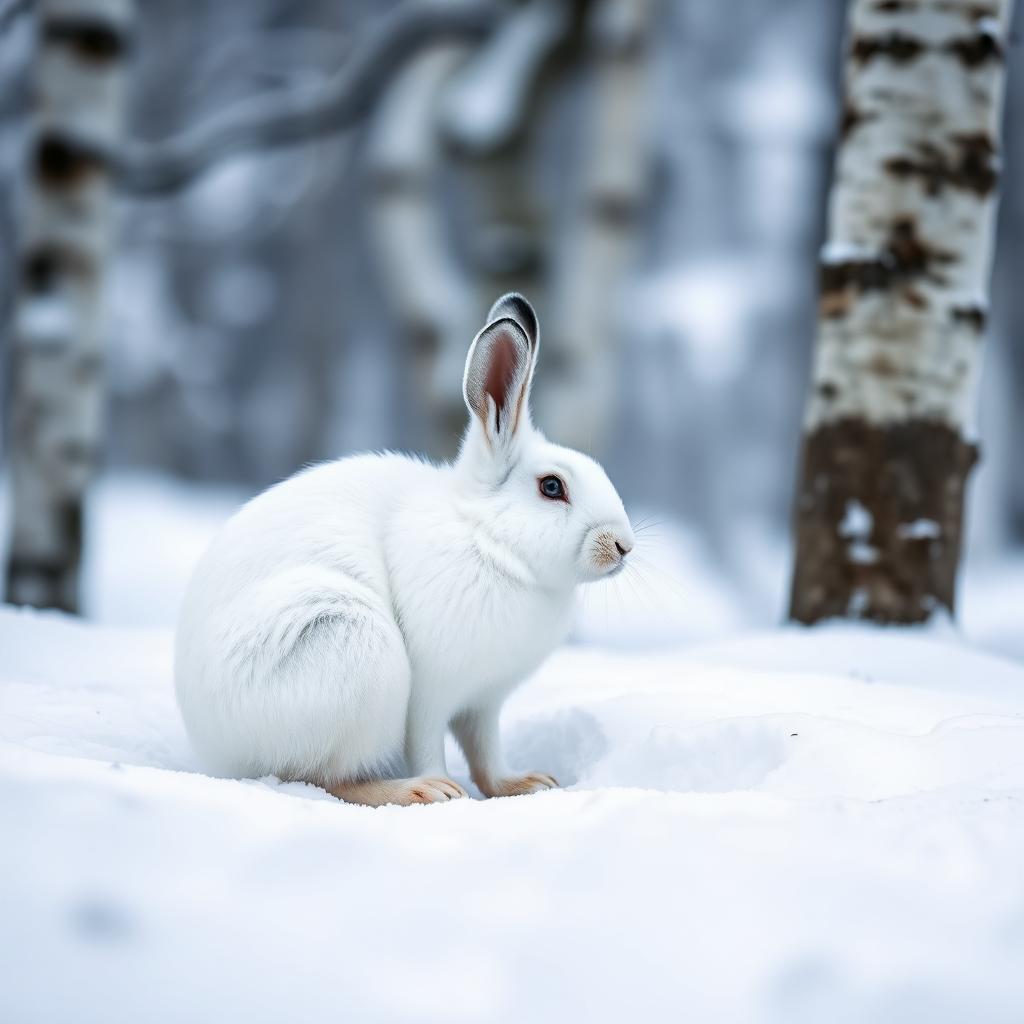
The keystone rodent-shaped animal of the boreal — feeds lynx, fisher, marten, owl, fox, and coyote, and turns pure white when the snow arrives.
Lepus americanus
- Weight
- 2–4 lb (0.9–1.8 kg)
- Length
- 16–20 in
- Lifespan
- 1–5 yr wild (usually 1)
- Feet
- Hind feet 4–6 in long, heavily furred
- Coat
- Rusty-brown in summer, pure white in winter
- Cycle
- 10-year population boom/crash, driving lynx numbers
- Litters
- 2–4 per year, 1–7 leverets each
- Range
- Boreal & montane forests of N. America
The cornerstone prey
Almost every mid-sized boreal predator eats hare. When hares boom, lynx boom, goshawks nest more, owls fledge more chicks. When hares crash, the whole predator community crashes with them. Reading hare sign is reading the health of the forest.
Molt and mismatch
Snowshoe hares molt twice a year: brown to white in fall, white to brown in spring. The trigger is day length, not weather. In warm years when snow arrives late (or leaves early), hares stand out as bright white against bare ground — a 'mismatch' that predators exploit. Modern climate shifts are stretching the mismatch window, which is a rising pressure on hare populations at the southern edge of their range.
Reproduction and turnover
Hares are the definition of an r-strategist prey animal: 2–4 litters per year, up to 7 leverets each, born fully furred with eyes open and running within hours. In a peak year, a single female can produce 15+ young. In a crash year, most of those young are eaten inside a week. Average adult lifespan is under two years.
Finding sign
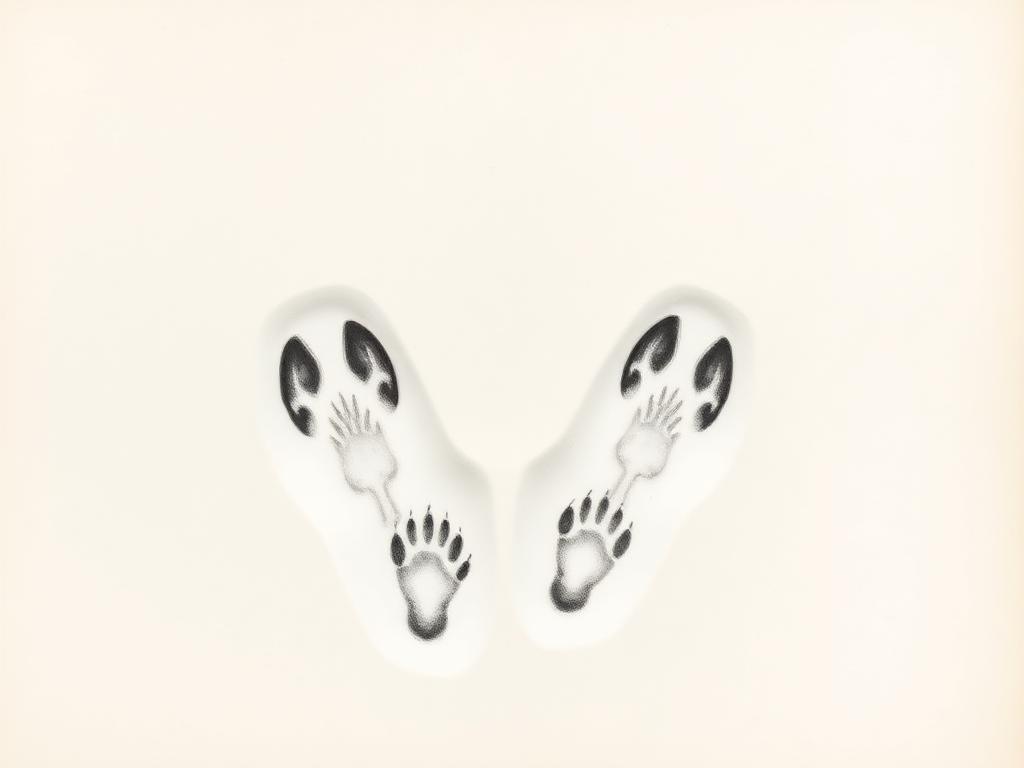
Look for browse — clean 45-degree cuts on willow, alder, and spruce seedlings, at snow-depth height. Round pellet piles, packed runways through thickets, and Y-shaped tracks with the two long hind feet ahead of the small forefeet. Runways get so hard-packed in winter you can ski them.
As trapline protein
Hares are the classic boreal snare animal. A simple wire snare on a well-used runway, set at hare-shoulder height with a supporting stick, catches them cleanly. Where legal and in season, they're the highest-return trapline protein in the North — but hare meat is famously lean, so pair it with fat sources or you risk 'rabbit starvation.'
Reading the tracks
How to identify snowshoe hare sign
- Size
- Hind foot 4–6 in long; group of 4 prints spans 10–20 in in a bound
- Gait
- Bounding — hind feet land ahead of and outside the smaller front paws in a Y or triangle pattern
- Best substrate
- Fresh powder snow 6+ in deep in willow / alder thickets at dawn.
What to look for
Look for the classic four-print bound: two elongated fur-blurred hind prints out front, two round front prints tucked behind and inside. Runways under alder and willow get packed hard as concrete.
Don't confuse with
Cottontail (much smaller, prints closer together) or red squirrel (tiny, tree-to-tree). Hare prints are the biggest small-mammal bound in the boreal.
Male vs. female
How to tell a male from a female
Male
Bucks are slightly smaller and leaner than does, with a slightly narrower face and no visible mammary development. In spring, dominant bucks show scarring on the ears and back from mating chases and boxing matches with rivals.
Female
Does are 10–25% heavier than bucks (rare among mammals — hares and rabbits are 'reverse dimorphic'). A pregnant or nursing doe shows a rounder body and visible nipples along the belly in summer.
At a distance
You almost never sex a snowshoe hare in the field — the size difference is too small at a glance. In March and April, watch for boxing pairs standing on hind legs and cuffing each other: that is a doe fending off a buck, not two males fighting. If leverets are close by, the adult present is the doe.
Field notes
- A pure-white hare against bare ground during a late freeze-up is the most exposed animal in the woods — take the photo, then move on.
- Fresh runway packed hard as concrete means hare density is high right now — lynx and marten are nearby too.
- Willow browsed at a clean 45° cut, all at snow-depth height, is the fingerprint of a hare feeding station.
Plan around this species
Where this matters in planning
The single most abundant boreal small-game animal, and the easiest to snare. If you plan a long trip, plan a snare kit.
- Build Your 10
Slot in a small-game tool (22LR, slingshot, snare wire) and a compact game bag.
- Gear categories
Filter to small-game tools, snare kits, and lightweight cordage.
- Field Dressing Small Game
Skin and gut a hare in a few minutes.
- Bushcraft Tools & Weapons
Snare wire, sets, and trail placement.
- Useful Fauna Knowledge
Read runs and pellet groups to pick a snare line.