


From the north · Wildlife
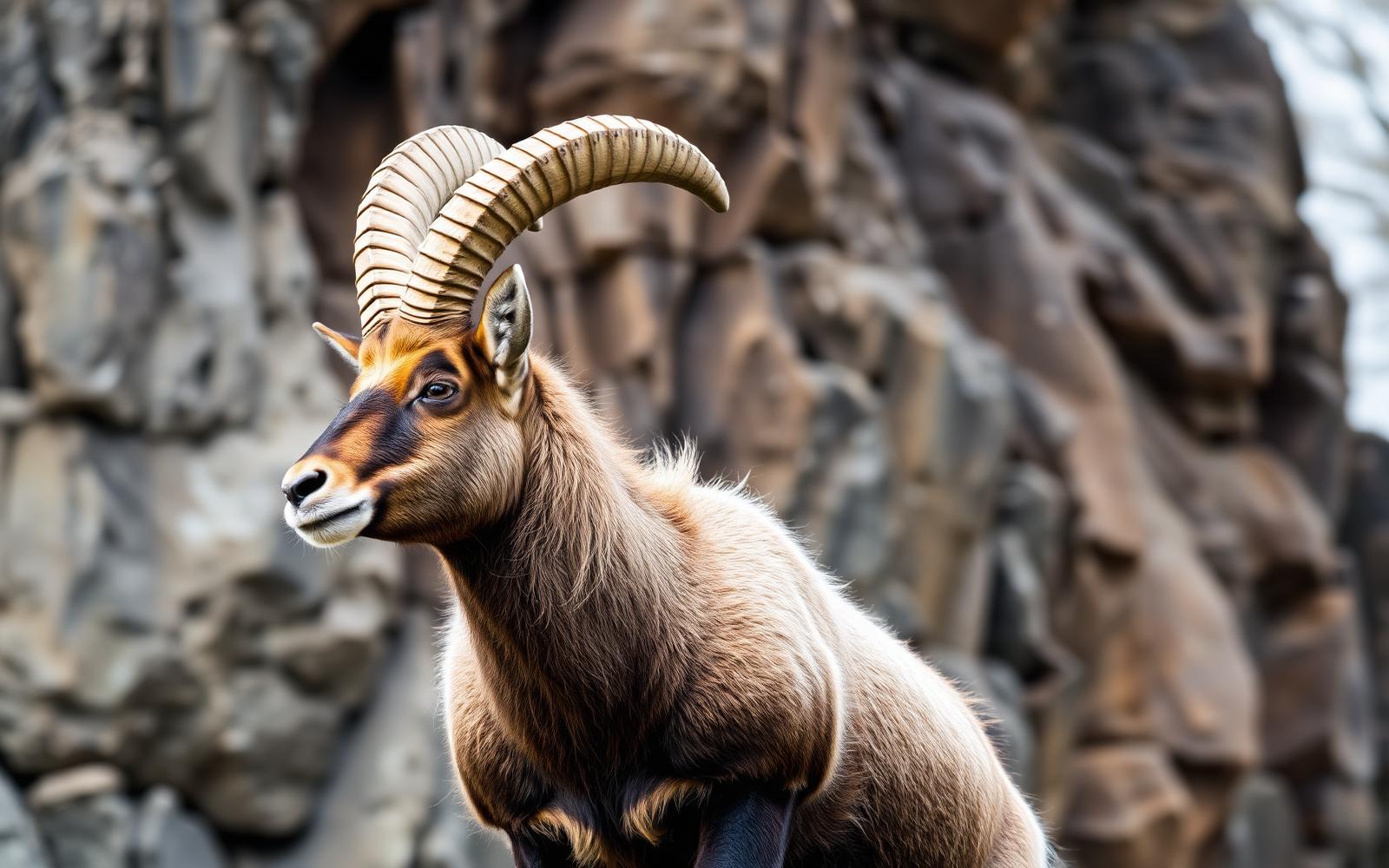
Siberian ibex
The cliff-dwelling wild goat of the Altai — snow leopard's other main prey and the only ungulate that goes higher than argali.
Capra sibirica
- Weight
- 130–290 lb (billies); 75–120 lb (nannies)
- Shoulder height
- 2.5–3.5 ft
- Horns (billies)
- 40–55 in, backward-scimitar, prominently ridged
- Lifespan
- 10–15 yr wild
- Habitat
- Cliff faces, scree, alpine 1,500–5,500 m
- Group size
- Nannies + kids in bands of 5–30; billies mostly solitary or small bachelor groups
- Kids
- 1–2 per yr, born May–June
- Range
- Altai, Sayan, Tien Shan, Pamir, Hindu Kush
The cliff specialist
Where argali holds the rolling ridge, ibex holds the cliff. Siberian ibex is the primary large herbivore of Mongolia's true cliff country — vertical rock walls and steep scree from about 1,500 m to over 5,000 m. They descend below treeline in the harshest winter months but spend most of the year above where any predator except snow leopard is at a significant disadvantage.
Horns and rut
A mature billy carries backward-curving horns of 40–55 inches, heavily ridged with distinct annual growth rings you can count from binoculars. During the December–January rut, billies chase, spar, and audibly clash horns on ledges — a sound that carries across whole cirques and is worth glassing toward. Kids are born tucked into cliff crannies in May and can climb near-vertical rock within a week.
Prey for snow leopard
Ibex and argali together make up 60–80% of snow leopard prey biomass across Mongolia. A cliff band that reliably holds ibex is a snow leopard travel corridor whether or not you find fresh cat sign. If ibex vanish from a face they have used for years, either a resident cat has moved on or something has changed the whole cirque — check for herder pressure or a fresh landslide.
Camp planning
Ibex triggered rockfall is a real hazard for camps sited under active cliff faces. Site your shelter on the flat below the scree apron, not up in the boulder field, and never sleep directly under an obvious ibex travel ledge — a spooked band can dislodge fist-sized stones that hit terminal velocity by the time they reach camp.
Field ID vs. argali
Ibex: horns curve straight backward with sharp ridges, prominent beard on the chin, compact stocky body, tail with a black tip. Argali: horns spiral outward and forward, no beard, taller and leaner build. On the same mountain, if it is on 55° rock, it is an ibex. If it is on rolling grass at the ridgetop, it is an argali.
Male vs. female
How to tell a male from a female
Male
Billies grow the tall, scimitar-curved horns that are the species' signature — a mature billy's horns can weigh 30+ lb as a pair. Long chin beard, dark 'saddle' patch on the flanks in winter, and heavier neck. Billies live largely alone or in small bachelor groups outside the rut.
Female
Nannies carry short, thin, gently curved horns (8–12 in) with much less ridging and no significant curl. No beard. Nannies and kids form the mixed herds that hold the cliff terrain year-round.
At a distance
Any ibex with 30+ inch backward-curving heavily ridged horns is a mature billy. Any small tan kid tucked next to an adult on a ledge is a nanny with a kid of the year.
Field notes
- Beard on the chin, horns curving straight back = ibex. Spiraled horns, no beard = argali.
- Rockfall triggered by a spooked ibex band is the real risk of camping under a cliff face — pitch on the flat, not the scree.
- A cliff face that used to hold ibex but no longer does is often the sign of increased herder or snow leopard pressure — glass the base for kill sites.