


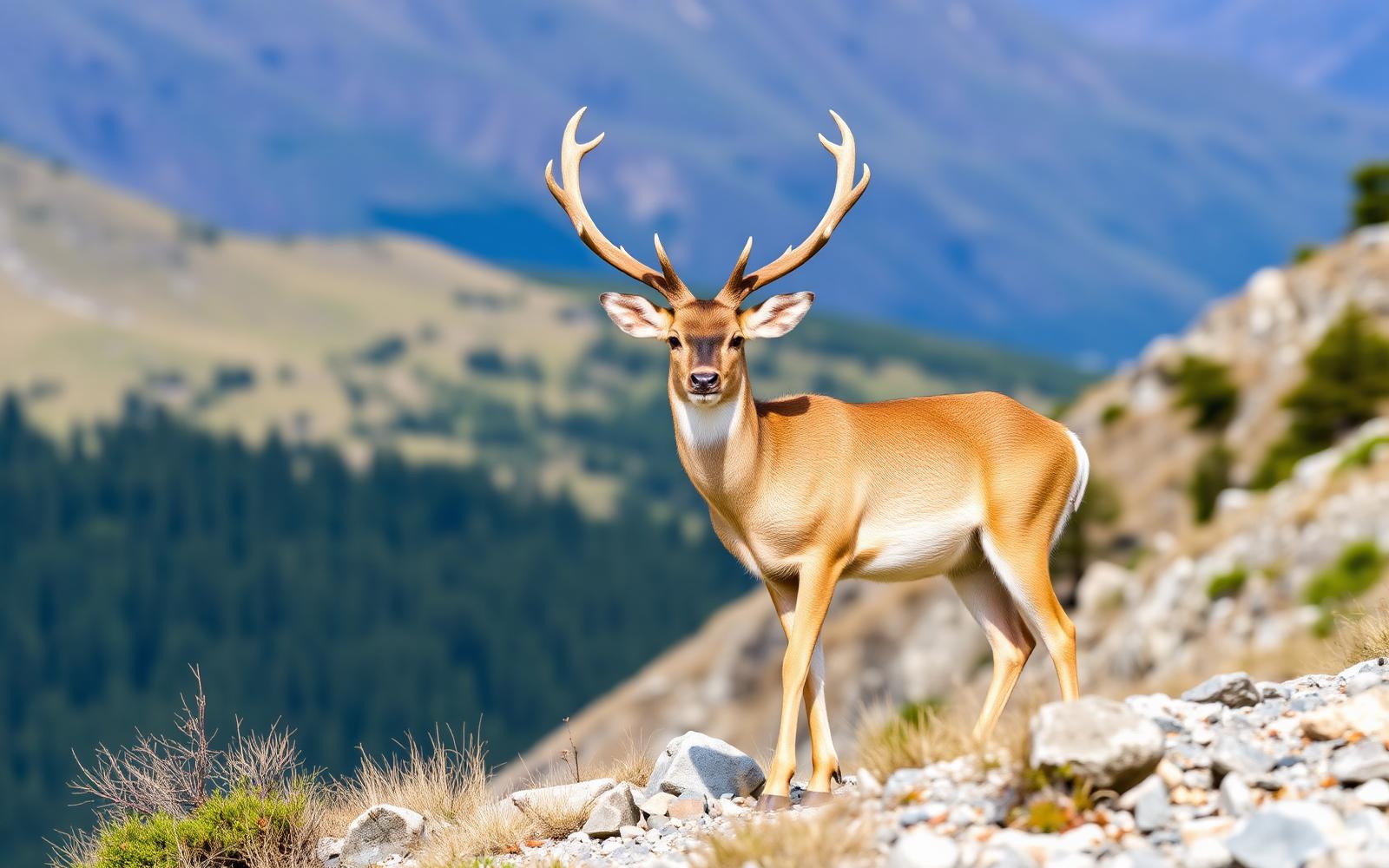
From the north · Wildlife
Huemul
The endangered mountain deer on Chile's national coat of arms — a stocky, cliff-adapted browser that most travelers pass without seeing.
Hippocamelus bisulcus
- Weight
- 150–220 lb (70–100 kg)
- Shoulder height
- 2.5–3 ft
- Antlers
- Bucks: short, simple forked, 8–12 in
- Lifespan
- 10–15 yr wild
- Habitat
- Subalpine lenga forest, avalanche chutes, rocky bluffs
- Group size
- Solitary, pair, or small family of 3–5
- Fawns
- 1 per yr, born Nov–Dec
- Status
- Endangered — under 2,500 in the wild
Why they matter
The huemul is one of the two deer on the Chilean coat of arms and one of the most imperiled large mammals in South America. Populations are fragmented, small, and pressured by domestic livestock, feral dogs, and habitat loss. Any huemul sighting in the field is a genuine event — and a reason to report it to CONAF or the local park service if you are on a permitted route.
Where you might see one
Steep subalpine terrain from about 800 m to treeline: rocky avalanche chutes cutting through lenga (southern beech) forest, bluffs above glacial lakes, and boulder-strewn slopes where cliff cover is one bound away. They feed at dawn and dusk, bed in dense scrub through midday, and rarely cross wide open country. Look for browse on lenga and Chilean bamboo (Chusquea) at deer height in country where guanacos don't range.
Behavior around people
Where undisturbed by dogs, huemul can be surprisingly approachable — remnant populations in remote parks will bed within 100 m of a hiking party without fleeing. This tameness is exactly what makes them vulnerable: a single feral dog running one herd can end that population's local persistence. Never bring an unleashed dog into huemul country.
Sign to read
Cloven prints similar to a mule deer, roughly 3 in long, with heavier register than a pudu (much smaller). Rubbed bark on Chilean bamboo at 40–60 cm height and clean 45° bite marks on lenga saplings are classic feeding sign. Latrines are small and scattered rather than communal.
What to do if you see one
Freeze, do not close the distance, get the photo from where you stand, and leave along your backtrail. Report the sighting with location, date, and group size to the park authority — huemul monitoring depends on this data. Do not share exact coordinates publicly; poaching and disturbance are still real pressures.
Male vs. female
How to tell a male from a female
Male
Bucks carry short, simply forked antlers (Y-shaped, 8–12 in) from spring through mid-summer, a dark facial mask across the eyes and muzzle, and a stockier neck than the doe. Small compared to a Rocky Mountain mule deer but proportionally heavier-boned.
Female
Does are antlerless, with a lighter face and a slimmer neck. From November through fall they may be accompanied by a single spotted fawn that stays hidden most of the day and moves to feed with the doe at dawn and dusk.
At a distance
An antlered animal is a buck. A single adult with a small fawn in a lenga clearing is a doe with her fawn of the year.
Field notes
- A huemul standing at 50 m in Patagonian lenga forest is a rare and reportable sighting — photograph and move on.
- Feral or off-leash dogs are the single biggest existential threat to huemul; leash your dog or leave it out of huemul country.
- Chusquea bamboo browsed cleanly at deer height, in country with cliffs above, is a good indicator of huemul presence.