


From the north · Wildlife
Guanaco
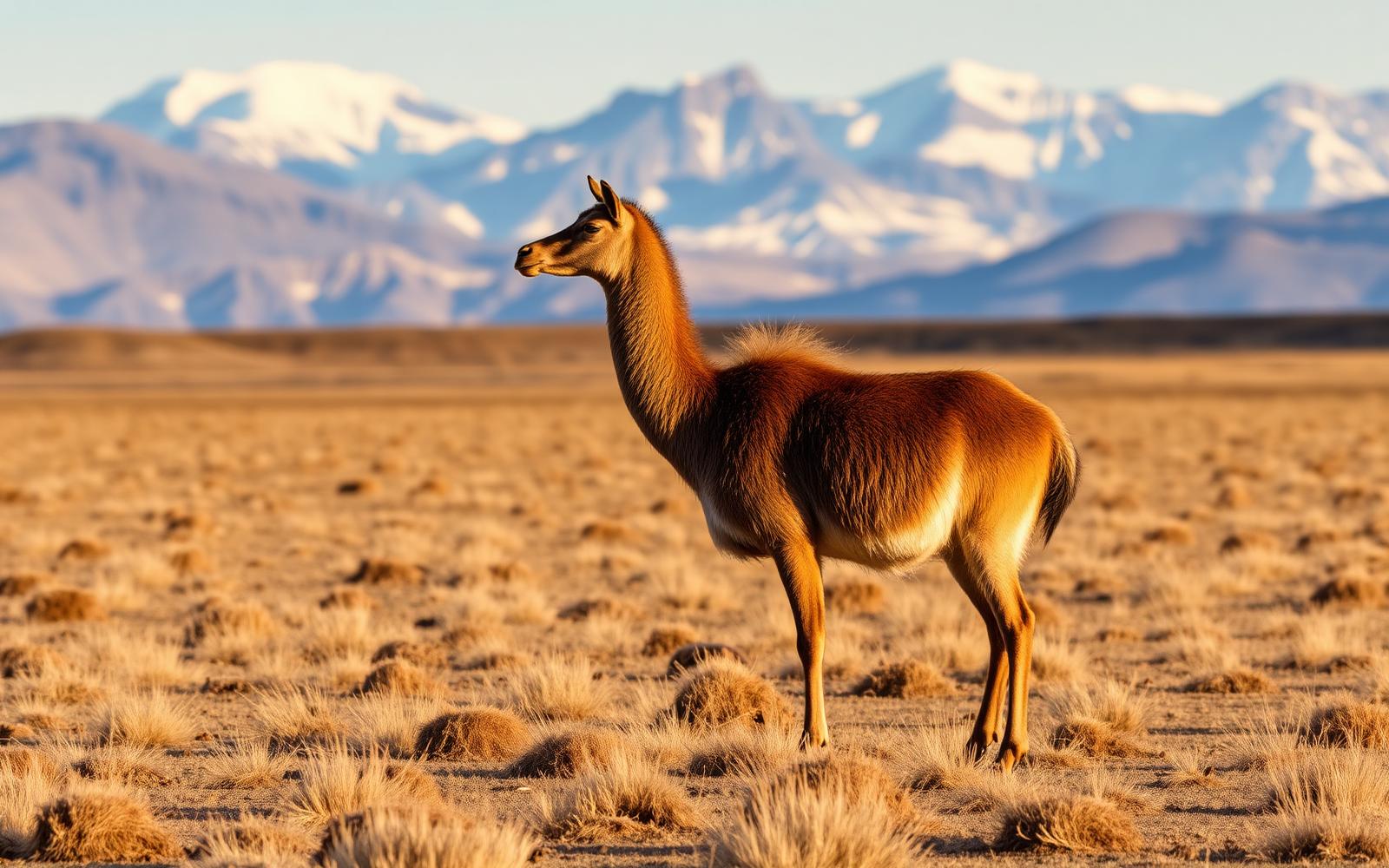
The wild ancestor of the llama and Patagonia's dominant large herbivore — the puma's main prey and the animal you'll see most in open country.
Lama guanicoe
- Weight
- 200–265 lb (90–120 kg)
- Shoulder height
- 3.5–4 ft
- Lifespan
- 15–20 yr wild
- Habitat
- Steppe, semi-desert, subalpine grassland
- Group size
- Family groups of 4–10; bachelor groups up to 50
- Chulengo (young)
- 1 per yr, born Nov–Feb
- Speed
- 35+ mph across open ground
- Range
- Patagonia, Andean foothills, Tierra del Fuego
The prey base for pumas
In Patagonia, guanaco is what deer is to a cougar in North America — the calorie source that supports the apex predator. Where you find guanaco herds, you are on the puma's dinner table. A herd feeding calmly in the open with sentinels posted is behaving normally; a herd tightly clumped, heads high, alarm-calling ('warble') and staring at one cover feature usually means a puma is bedded there.
Family group vs. bachelor group
A dominant male holds a small family group of 3–8 females and their offspring on a defended territory year-round. Non-breeding males form loose bachelor herds of up to 50 animals that drift across marginal country. In November–February, the dominant male chases yearlings out of the family group — a yearling wandering alone across open ground in summer is often a recently expelled disperser.
Anti-predator behavior
Guanacos are among the most alert prey animals on Earth. A sentinel posts on a high point, ears forward, and the whole herd reads its posture. The alarm call is a warbling neigh, and a fleeing herd runs single-file to a chosen escape route rather than scattering. If a herd bolts one direction and you saw no reason, the puma is somewhere behind them — check your own six.
Camp planning
Guanaco pellet piles ('bosteaderos') are shared latrines up to a metre across, refreshed for decades. Camping near one guarantees a pre-dawn stare-down and can attract puma reconnaissance. Site your shelter at least 100 m off any active bosteadero and off the obvious escape trails between water and the cliff line.
As food and skin
Where legal, guanaco is lean protein and the skin (chulengo hide in particular) is one of the warmest, lightest wild hides in South America. Historically the Tehuelche relied on guanaco for meat, hide, sinew, and bone tools. A downed guanaco is a puma magnet — hang, cover, and expect competition within hours.
Field notes
- A herd staring at one bush and warbling is telling you the puma is inside 100 yards.
- A large communal dung pile (bosteadero) is a bad campsite — traffic and predator pressure are both high.
- A single yearling wandering alone across the steppe in December is usually a chased-off disperser, not a lost animal.