


From the north · Wildlife
Arctic fox
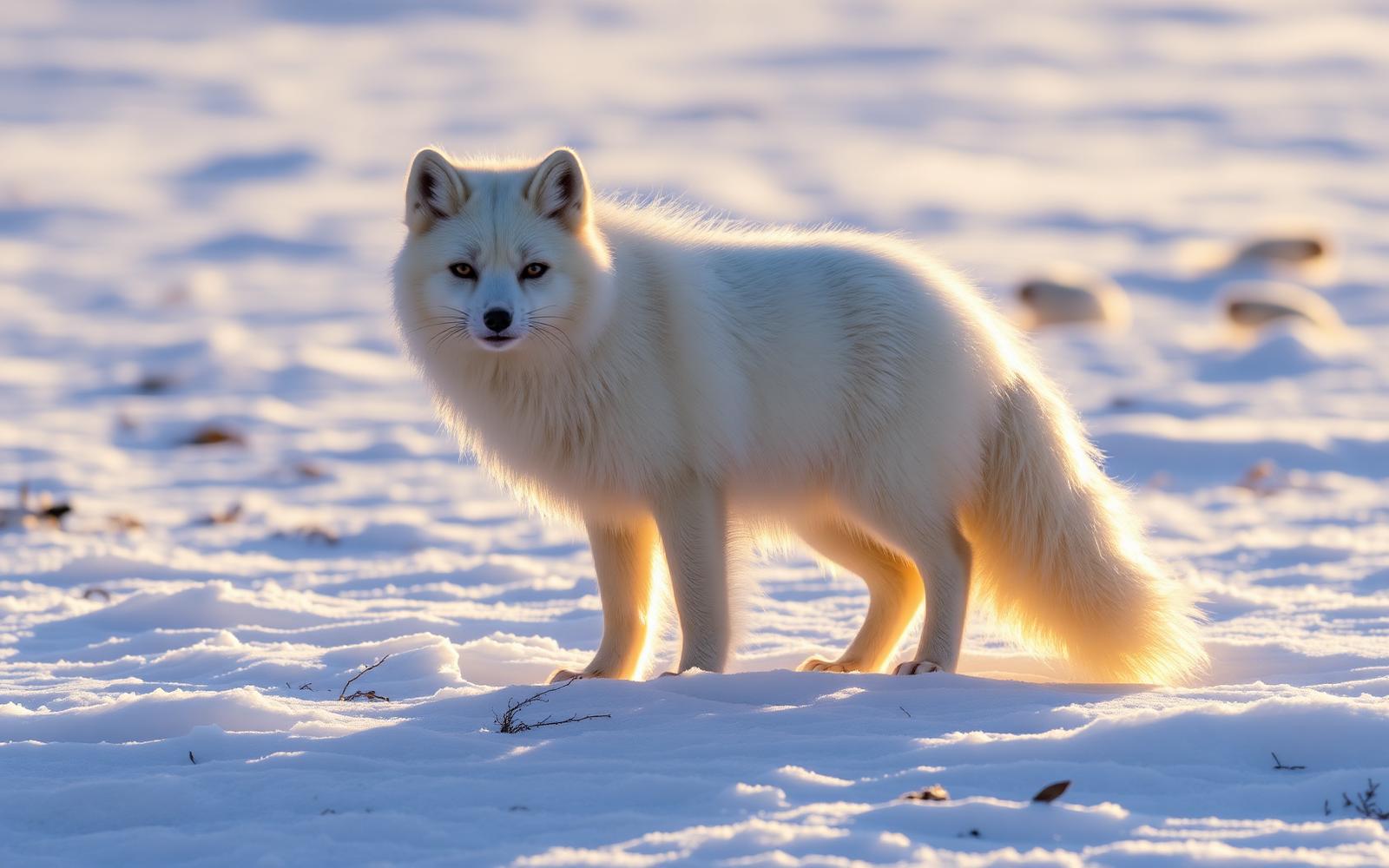
A small tundra predator with the warmest fur of any mammal — often the last carnivore working a carcass after the polar bear has left.
Vulpes lagopus
- Weight
- 6–17 lb (3–8 kg)
- Length
- 18–27 in body + 12 in tail
- Lifespan
- 3–6 yr wild
- Coat
- Pure white (winter), brown-grey (summer)
- Fur R-value
- Warmest of any mammal, functional to −40 °C without shivering
- Diet
- Lemmings, voles, ptarmigan, seal carrion, bird eggs
- Kits
- 5–14 per year, born May–June in a den
- Range
- Circumpolar Arctic; south into Labrador and NWT
Where they intersect Alone terrain
Arctic foxes hold the coast and tundra edge from the Labrador Sea through the NWT. Camps sited near the shore or on the tundra fringe of Great Slave Lake will see them, especially in winter when they follow polar bears out onto the sea ice and scavenge seal carcasses. They shift inland along river valleys in summer and den in eskers, riverbanks, and sandy ridges with hundreds of years of accumulated pup fertilizer visibly greening the tundra above.
As a scavenger and camp visitor
Arctic foxes are bold, curious, and completely fearless around people — the closest wild mammal you will ever have inside 10 feet in the Arctic. They will grab boots, gloves, drying fish, and unattended snacks. They cache surplus food, so a fox that steals a fish is not eating it — it is burying it under snow 100 m away. Rabies is present in the Arctic fox population; do not touch them or let one bite gear you'll put back on your body.
Lemming cycles
Fox reproduction rides the lemming cycle: in a peak lemming year a vixen may raise 14 kits; in a crash year the whole litter starves. This 3–5 year boom-crash is why fox sightings vary wildly between seasons on the same terrain, and why snowy owls and Arctic foxes tend to boom together.
Camp planning
Bear-hang or hard-case all food regardless of size, hang gear that smells like sweat or fish off the ground, and never leave a boot outside the shelter overnight — a fox will drag it a hundred yards. Foxes are not a personal-safety threat but they are the most reliable food-security nuisance north of the treeline.
Winter camouflage
The white morph turns pure white by early November and holds that coat until April. On bare wind-scoured ground during a warm winter, a white fox is as exposed as a mismatched snowshoe hare. The 'blue' morph (dark grey year-round) is more common in coastal Labrador populations and never turns white — a rare planning oddity when confirming ID.
Reading the tracks
How to identify arctic fox sign
- Size
- 1.5–2 in long, small round pad, heavily furred prints in winter blur the toe outline
- Gait
- Direct-register trot; long straight trails between kill sites and caches
- Best substrate
- Wind-packed snow along beach ridges and inland eskers.
What to look for
Small round print with dense fur haze that blurs individual toe pads in winter. Trails are straighter and more purposeful than a red fox's, and often follow polar bear or wolf tracks out onto the ice.
Don't confuse with
Small red fox (larger, sharper toe outline) and marten (bounding gait, closer set).
Field notes
- A fox in camp is not a curiosity, it is a food-security failure — hard-case every snack the first time it visits.
- Rabies is endemic in Arctic fox populations. Never touch, feed, or handle one, even a friendly-looking pup.
- A green splash of vegetation on a dry esker in July often marks a centuries-used fox den — worth a wide berth in denning season (May–August).