


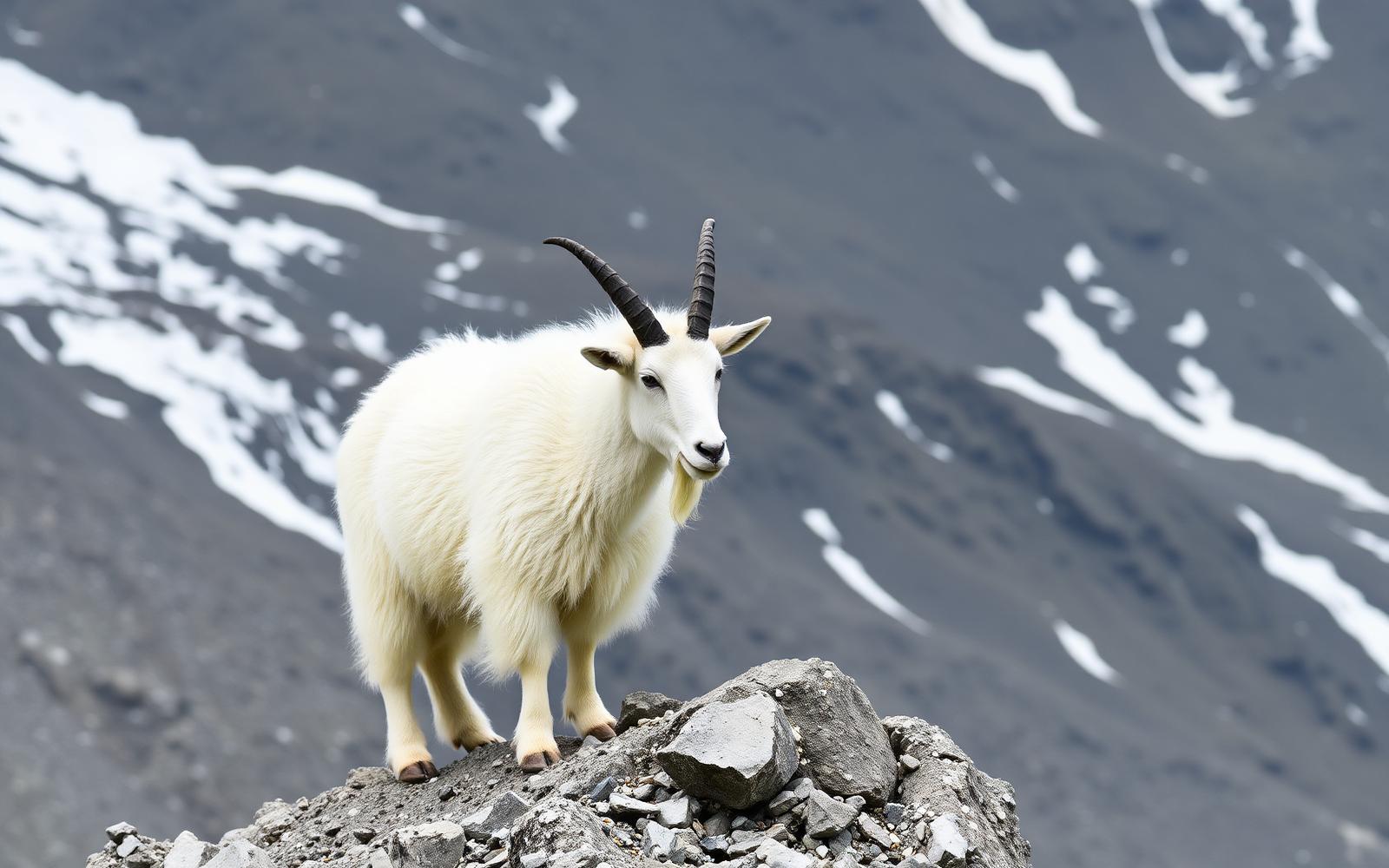
From the north · Wildlife
Mountain goat
A cliff-adapted alpine specialist — not a true goat, and one of the few large mammals more sure-footed than a cougar on wet rock.
Oreamnos americanus
- Weight
- 125–250 lb (billy); 100–180 lb (nanny)
- Shoulder height
- 3–3.5 ft
- Horns
- 9–12 in, black, dagger-shaped, both sexes
- Lifespan
- 12–15 yr wild
- Habitat
- Alpine cliff, scree, mineral licks
- Group size
- Nannies + kids in bands of 4–20; billies mostly solitary
- Kids
- 1–2 per yr, born late May on cliff ledges
- Range
- BC Coast & Interior, SE Alaska, Rockies, N. Cascades
Why cliff country
Mountain goats trade grass biomass for absolute predator security. No wolf, cougar, or bear willingly follows a goat onto 55-degree exposed rock, so the animal spends its life on ledges that would kill any other ungulate. The hoof is soft-padded inside and hard-shelled outside, giving the traction a climbing shoe imitates. Where you see them is almost never where you can safely go.
Country in the Chilko region
In the interior BC ranges around Chilko Lake, goats hold high on the granite headwalls above treeline all summer, drop to mineral licks in mid-summer, and winter on wind-scoured south-facing cliffs where snow blows clear. Look for white specks on grey rock at 6,000–8,000 ft, and for tufts of white belly hair caught on krummholz or ice-glazed shrubs at treeline.
Nannies vs. billies
Nannies (females) and their kids form bands that dominate the best cliff terrain year-round. Billies (males) live largely alone or in loose bachelor groups from spring through summer and only rejoin the females for the November rut. In any mixed group, the animal being avoided by the others is usually a nanny — nannies dominate billies on the mountain, an unusual pattern among ungulates.
As game and as danger
Where legal, mountain goat is a demanding backcountry hunt with very high risk of a fatal fall on the recovery. As a wildlife hazard: a mountain goat is generally indifferent to humans, but goats habituated to salt (sweat, urine) in high-use trail corridors will follow hikers and have gored people at Olympic National Park and elsewhere. Do not urinate on trail — urinate off-trail on rock — in goat country to avoid training them onto the tread.
Winter survival
Goats winter high, not low. On the coldest days they cluster on wind-scoured cliffs where the snow blows clear enough to reach lichen and cured grass. A late spring storm that ices the cliffs is a bigger mortality event than any winter, because it seals off the last forage. Long spring die-offs on inaccessible ledges are the reason ravens work certain faces every May.
Male vs. female
How to tell a male from a female
Male
Billies are slightly heavier and blockier, with a broader nose bridge, thicker neck, and horns that curve more gradually with a heavier base. Long chaps (leg hair) get more pronounced in mature males. In rut, billies dig urine pits and rub the urine into their belly hair — the resulting yellow stain is a reliable rut ID.
Female
Nannies are slimmer through the shoulder, with a more slender face and horns that rise straighter before hooking sharply. Nearly always accompanied by a kid (spring–fall) or a yearling. Nannies are the dominant sex on the mountain — an animal that displaces others from a bed or feeding site is a nanny.
At a distance
Sexing goats at distance is hard — both sexes are white with black horns. Company is the tell: an adult with a small white kid trailing on the ledge is a nanny; a solitary large white goat traveling alone in summer is almost always a billy.
Field notes
- A white speck on 55° rock is a goat; anything below the cliff foot is almost never a goat — cross-check with binoculars.
- Tufts of white hair caught on subalpine fir at treeline in July mark a summer travel route from lick to bed.
- Never urinate on trail in goat country; salt training is how goats get habituated and dangerous.