


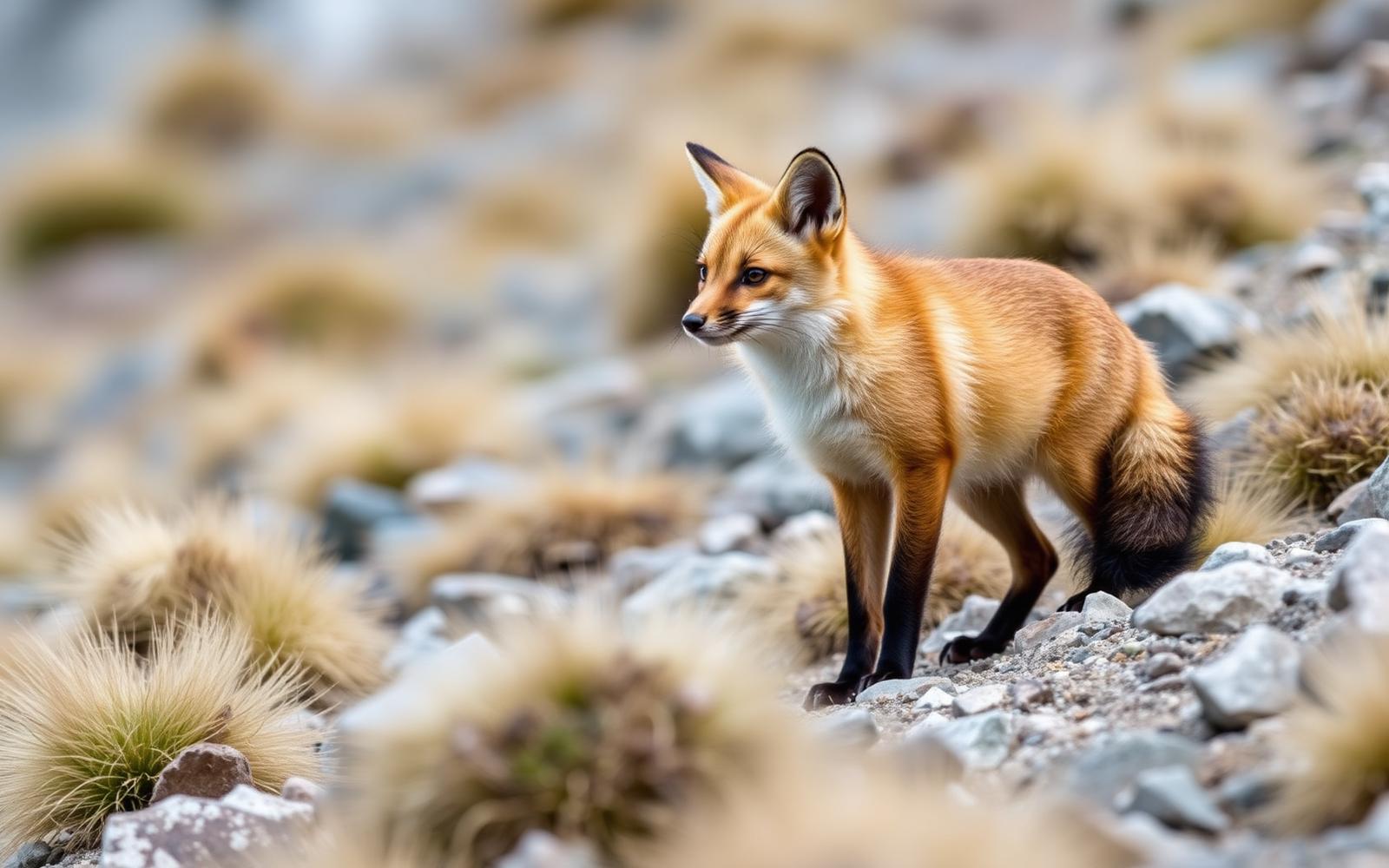
From the north · Wildlife
Culpeo
Patagonia's largest fox — a mid-sized predator that fills a coyote-shaped niche where no wolves or coyotes ever evolved.
Lycalopex culpaeus
- Weight
- 15–30 lb (7–14 kg)
- Length
- 23–35 in body + 12–18 in tail
- Lifespan
- 5–8 yr wild
- Habitat
- Steppe, semi-desert, Andean forest edge, altiplano
- Diet
- European hare, rodents, birds, carrion, lambs
- Group size
- Solitary or pair; pups stay with mother into fall
- Pups
- 3–8 per yr, born Oct–Nov
- Range
- Andes from Colombia to Tierra del Fuego
Not a fox in the North American sense
The culpeo is closer in body size and behavior to a small coyote than a red fox. It fills the mid-sized carnivore niche in Patagonia — a role that in North America is split among coyotes, bobcats, and foxes. Second only to puma as a mammalian predator on the steppe, culpeos take everything from mice up to newborn guanaco chulengos and adult European hares.
Where you'll see them
Culpeos are more diurnal than most foxes — commonly seen at dawn, dusk, and even midday on the open steppe, along road edges, and around estancia (ranch) buildings. They den in rock crevices, abandoned burrows, and dense scrub. In lodge and refuge country they habituate quickly and will scavenge camp scraps.
Livestock and conflict
Because culpeos take lambs, they are heavily persecuted across Patagonian sheep country — poisoned baits, snares, and shooting reduce local populations wherever livestock density is high. In protected areas (Torres del Paine, Los Glaciares) they are common and tolerant of humans. On working estancias they are largely absent from view even where present.
Sign and camp planning
Small canid tracks (2 in long) with 4 toes and a chevron pad. Scat is small, rope-shaped, and often full of hare bones or rodent fur, placed prominently on rocks or trail junctions to mark territory. In camp, hard-case food and never hand-feed — a fed fox learns to enter tents, and losing that boundary is a problem for the next party in as much as for you.
Cousin the chilla
The smaller South American gray fox (chilla, Lycalopex griseus) shares much of the same range. Culpeo is noticeably larger, redder, with a heavier build and a proportionally shorter, blacker-tipped tail. If it looks the size of a small coyote, it's a culpeo; if it looks the size of a big house cat, it's a chilla.
Field notes
- A large red fox in Patagonia at midday, walking a road edge unafraid, is almost certainly a culpeo, not a chilla.
- Culpeos habituate fast — never hand-feed one, even if it looks tame at a refuge.
- Small canid scat packed with European hare bone on a rock outcrop is culpeo territory marking.