


From the north · Wildlife
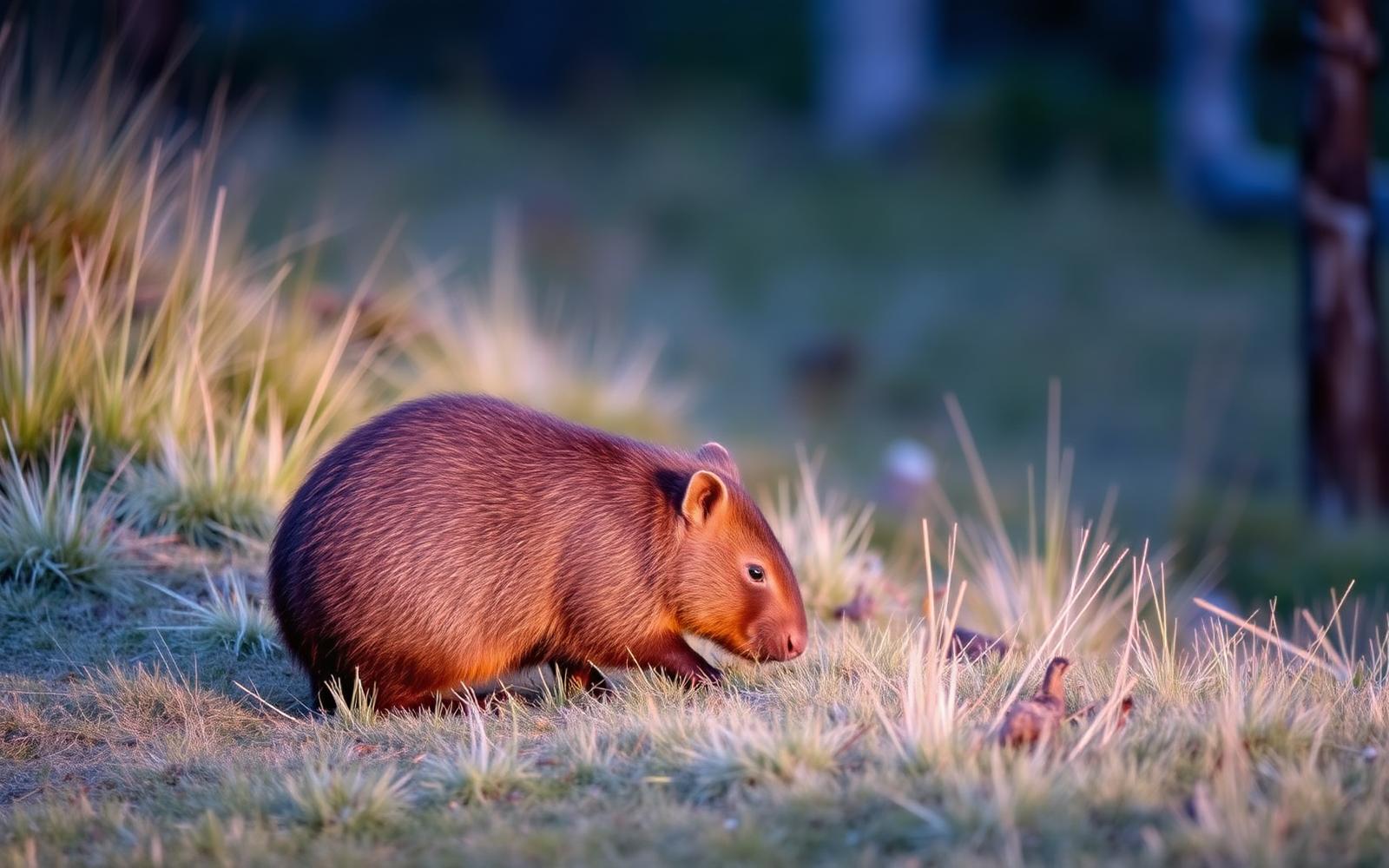
Common wombat
A 60-pound burrowing marsupial with a bone plate in its rump and cube-shaped scat — the tank of the Tasmanian forest.
Vombatus ursinus
- Weight
- 45–90 lb (20–40 kg)
- Length
- 35–47 in body + tiny stub tail
- Lifespan
- 15+ yr wild
- Habitat
- Eucalypt forest, moor, sub-alpine grassland with diggable soil
- Diet
- Native grass, sedge, roots — nocturnal grazer
- Burrow
- Multi-entrance tunnel systems up to 200 ft long
- Young
- 1 per yr, pouched ~6 months, then at-heel to ~18 months
- Range
- Tasmania, SE mainland Australia, Bass Strait islands
Behavior
Common wombats are nocturnal, solitary grazers that emerge from their burrows at dusk to feed on grass and sedge, and return to the burrow before dawn. In cold Tasmanian weather they will also feed briefly during the day, especially in winter. A wombat outside its burrow is either grazing, walking to another burrow (they use multiple), or looking for a mate — nothing else brings them above ground.
The armored rump
The wombat's rear is a cartilage-and-bone plate — a defensive shield that lets it back into a burrow and block the entrance against a predator. A dingo, dog, or Tasmanian devil that tries to bite through gets nothing but calloused hide. Historically, wombats have killed cornered dogs by trapping them against the burrow roof and crushing them. Do not corner one.
Cube-shaped scat
Wombats produce the only cube-shaped scat of any mammal — 4–8 dark cubes deposited on rocks, logs, and small mounds along the animal's route. The cubes are formed by uneven muscle contraction in the last section of the intestine (documented in a widely cited 2018 study) and they don't roll off the object they're placed on, which is exactly the point: they're territorial markers. Cube scat on top of a rock in Tasmania is unmistakable and diagnostic wombat sign.
Camp planning
Wombat burrow systems weaken the ground for hundreds of feet — do not pitch a tent directly over one or you may end up with a leg through the roof. At dusk, expect wombats to appear silently at camp edges; they do not react to lights or noise the way other wildlife do and will simply keep grazing 20 m from your fire. Do not try to touch or feed one — an alarmed wombat can outrun a person over 20 m and inflict serious bites and scratches.
Mange and disease
Sarcoptic mange (from introduced dogs and foxes on the mainland) is the biggest wildlife health issue for common wombats. A wombat with heavy hair loss, thickened crusty skin, and daytime lethargy is severely mange-infected and dying slowly. In Tasmania this is now documented in isolated populations. Report to the Bonorong Wildlife Sanctuary or DPIPWE rather than approaching a sick animal.
Field notes
- Cube-shaped scat on top of a rock is diagnostic wombat sign — one of the most distinctive scats in world wildlife.
- Never pitch a tent over wombat burrow ground — the tunnel system can collapse under a person's weight.
- A wombat with heavy hair loss and daytime lethargy is severely mange-infected — do not approach; report to a Tasmanian wildlife authority.