


From the north · Wildlife
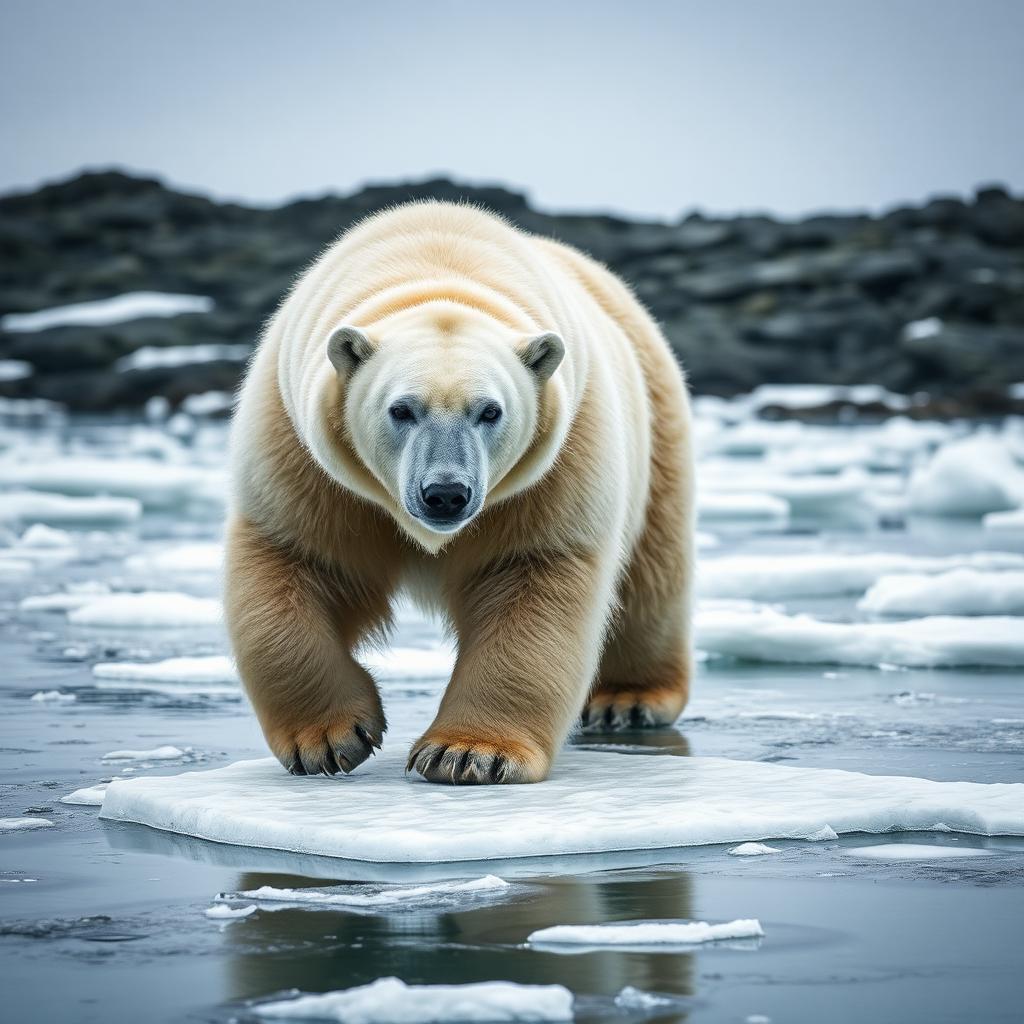
Polar bear
The only bear on Earth that treats humans as legitimate prey — the reason Labrador and Frozen crews carry a rifle to the shoreline.
Ursus maritimus
- Weight
- 700–1,500 lb (males); 400–700 lb (females)
- Length
- 8–10 ft nose to tail
- Lifespan
- 15–18 yr wild
- Range
- Circumpolar Arctic; south to Labrador coast in winter
- Prey
- Ringed & bearded seal, carrion, occasionally humans
- Swim
- 60+ miles non-stop
- Litter
- 1–3 cubs every 3 yr
- Sense of smell
- Detects a seal breathing hole from 1+ mile
Why they are different from other bears
Polar bears did not evolve alongside humans and have no cultural fear of us. Where a grizzly or black bear reads a person as a competitor to bluff or avoid, a polar bear reads a person as a slow, upright, warm-blooded prey item roughly the size of a seal. Predatory attacks are rare only because encounters are rare — not because the bear is reluctant.
Where they show up on Alone terrain
The Labrador coast (Season 9 footprint) has a resident sub-population that follows the pack ice south in winter and summers on land, moving inland along river valleys. Great Slave Lake itself is too far south for polar bears, but Frozen and NWT crews on the arctic-facing coast can encounter them at any season. Denning females emerge from snow-bank dens along coastal ridges from March through May and are extremely defensive.
Detection and deterrence
A polar bear stalking a camp will often circle downwind at 100–300 yards for hours, testing scent, before closing. Trip-wire flares, a perimeter of dogs, and a person on watch through the low-light hours are the standard prevention stack in bear-country research camps. Bear spray works but has a much narrower window than on a black or grizzly bear because the closing speed on packed snow is fast and the fur/fat insulation reduces effect. A large-bore rifle (12-gauge slug minimum, .30-06 or larger preferred) is the accepted stopping tool.
Behavior cues
A curious bear approaches head-up with an even walk, nose working. A predatory bear moves head-low, ears flattened, no vocalisation, and does not stop when you shout or wave. There is no bluff charge phase — a polar bear that commits, commits. Females with cubs are the second high-risk category and will attack to defend a den zone up to a kilometre out.
Camp planning
Never camp on a beach ridge, seal-haulout, or the mouth of a river where bears travel. Cook and store food at least 100 yards from the sleeping shelter, downwind of prevailing weather. Burn or pack out every scrap of grease — polar bears will follow a scent trail miles inland. Keep the rifle within arm's reach of the bag, chambered, on safe.
Field notes
- A polar bear stalking a camp usually circles downwind for hours before closing — a person on night watch is the single most important control.
- Bear spray works but has a shorter effective envelope than on brown or black bears; carry it as backup to a large-bore rifle, not as primary.
- Predatory approach is head-low, ears back, silent — no bluff phase. If you see it, you are already inside the decision window.