

From the north · Wildlife
Moose
The largest deer on Earth — a 1,000-pound answer to every question about protein, danger, and river crossings in the boreal.
Alces alces
- Weight
- 800–1,600 lb (360–725 kg)
- Shoulder height
- 5.5–7 ft
- Antler spread
- Bulls: 4–6 ft palmated
- Lifespan
- 15–20 yr wild
- Diet
- Willow, aspen, aquatic plants, birch
- Home range
- 5–50 sq mi
- Calves
- 1–2 per yr, born late May
- Range
- Boreal & sub-arctic across N. America and Eurasia
The most dangerous animal in the woods
A moose injures more people in the North than bears and wolves combined. They are unpredictable, extremely fast off the mark, and will absolutely defend calves, rut territory, or personal space with a front-hoof strike that shatters bone. A cow with a calf in June, or a rutting bull in September–October, should be treated with more caution than any predator you may meet on the same trip.
Country to expect them
Willow flats along river oxbows, beaver flowages, burn-regeneration in a 5–15-year window, alder-choked creek bottoms, and shallow lakeshores where they feed on aquatic vegetation. In winter they yard up in mature conifer with a browsable understory. Fresh sign is unmistakable: dinner-plate hoof prints, chin-height stripped willow, and piles of moist oval pellets like small chocolate footballs.
Rut behavior
Bulls rut from mid-September to mid-October. A rutting bull grunts, thrashes willows, digs urine wallows, and will charge anything — moose, human, canoe, ATV — that comes between him and a cow. The 'wallow' is a mud pit soaked with urine that cows roll in; if you smell strong urine along a game trail in fall, back out. Cow calls answered by a grunting bull crashing toward you are how most rut-related injuries start.
As food and calories
A downed adult moose is 400–800 lb of edible meat and organs — the single largest calorie source available in the boreal. It is also a magnet: wolves, bears, wolverines, and ravens locate a kill within hours. If you take one (legal harvest only), quarter and hang immediately, cache under bear-resistant cover, and expect night visitors. Never sleep next to a kill.
Winter yards
In deep snow, moose gather in yards — dense conifer stands where the canopy intercepts snow and browse is reachable. A yard cut off from spring green-up by early logging or roads becomes a starvation trap. Reading a fresh yard in February is reading who survived the last two months, and predicting who the wolves will pressure next.
Male vs. female
How to tell a male from a female
Male
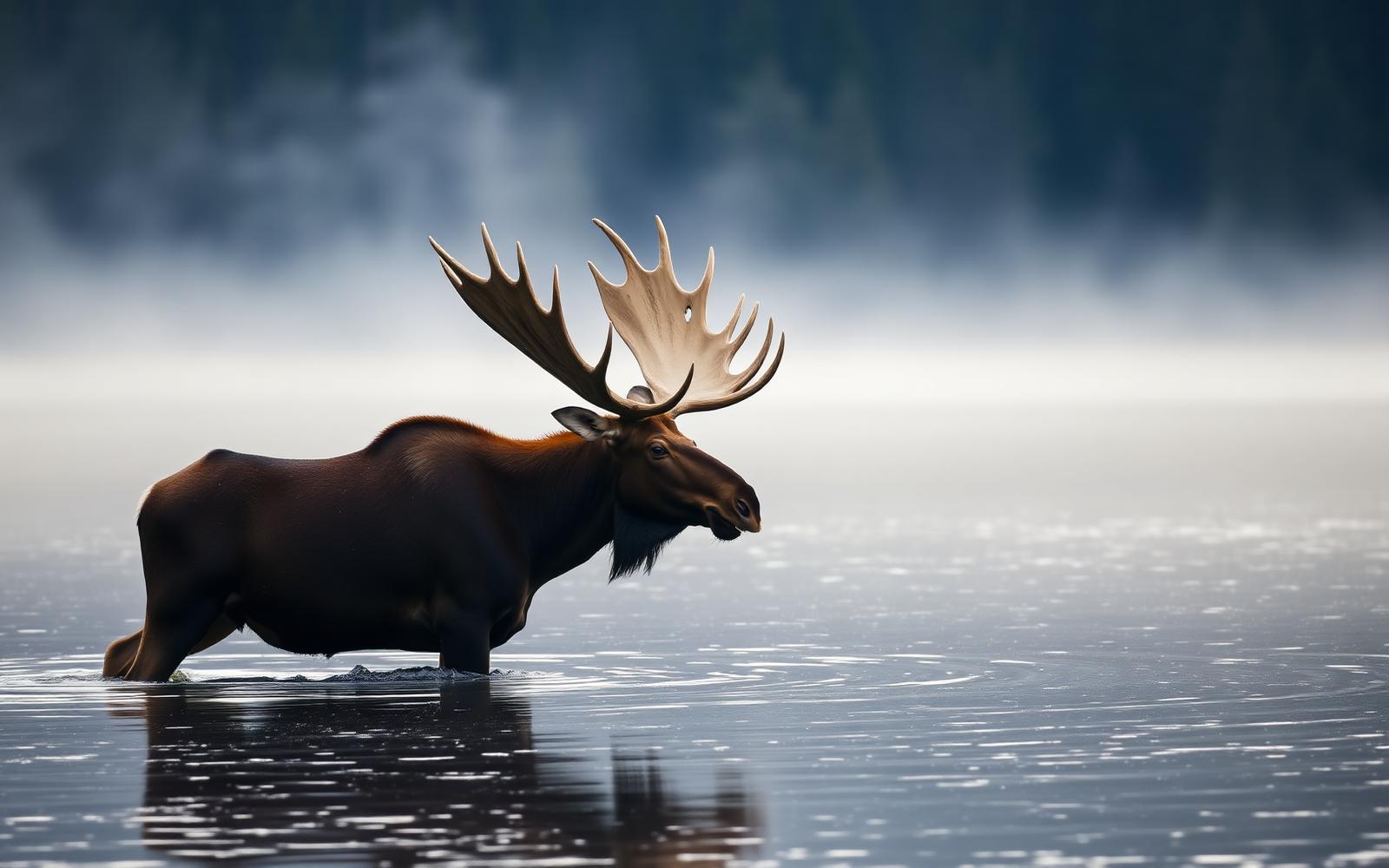
Bulls carry massive palmated antlers from May (velvet) through November (drop), plus a heavy dewlap ('bell') hanging under the chin. In rut they develop swollen necks and dark, urine-stained shoulders. Boy moose average 200–400 lb heavier than cows.
Female
Cows are antlerless year-round, with a slimmer face and no dewlap. From May onward a cow with a red-brown calf trailing behind is the typical summer sight. Cows defend calves more aggressively than any bear.
At a distance
Any moose carrying antlers from June through October is a bull. Any moose with a small red-brown calf close by is a cow — and the most dangerous single animal in the woods that day.
Field notes
- Ears flat back, hackles up, tongue licking the muzzle — the bull has decided to charge. Get a tree between you now.
- A cow snorting and stomping between you and a hidden calf is a warning. Retreat exactly the way you came, do not circle.
- A fresh urine wallow smelling strongly of ammonia in September means a rutting bull is inside 200 yards.