


From the north · Wildlife
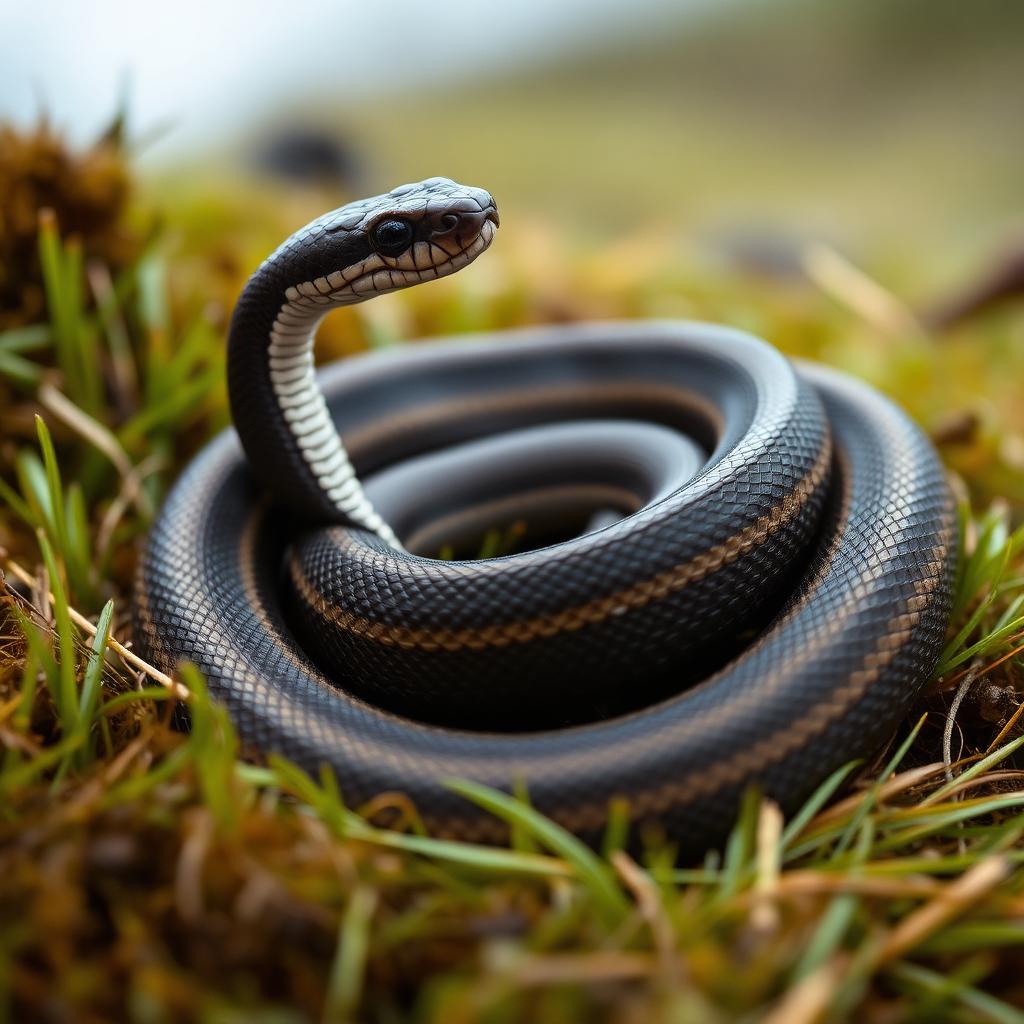
Tiger snake
Tasmania's most medically significant snake — highly neurotoxic venom, willing to stand its ground on cool days near water.
Notechis scutatus
- Length
- 3–5 ft (0.9–1.5 m), rarely to 7 ft
- Venom
- Highly neurotoxic + coagulopathic; LD50 ~0.12 mg/kg
- Fangs
- 3–5 mm, fixed front-fang delivery
- Range in Tas
- Statewide — sea level to sub-alpine
- Habitat
- Wetland margins, button-grass moor, farm dam edges
- Active
- Sep–Apr; daytime cool weather, dusk in summer
- Diet
- Frogs, lizards, small mammals, birds
- Bite rate
- ~35 hospitalisations per yr in Tas; 1–2 deaths per decade
Why they matter on Alone Australia terrain
Every Alone Australia location is inside tiger snake range. They concentrate along the same water edges you use for fishing, water collection, and shelter siting — button-grass moor at the wet edge, tea-tree fringe around lagoons, rock scree above trout streams. Tasmania has no antivenom cache in remote camps; a bite is a medevac emergency with a 4-hour therapeutic window at best.
How to read the snake
A calm tiger snake moves off. A defensive one flattens the neck, holds a slow S-curve, and hisses — that is the last warning before a strike. Cool-weather tiger snakes are slower to flee than red-bellied blacks or copperheads and will hold ground rather than retreat, which is why most bites happen in spring at 15–20 °C rather than at summer peaks. Colour ranges from jet black to olive with cream bands; do not rely on colour for ID.
Bite management
Assume every bite is envenomated. The Australian pressure-immobilisation technique is the standard: firm crepe bandage over the bite and up the entire limb (as tight as for a sprain), splint the limb straight, keep the casualty absolutely still, and call for extraction. Do NOT cut, suck, wash, or apply a tourniquet. Do NOT walk the casualty out. Venom moves through lymph, not blood — movement is the accelerator. Onset of headache, nausea, ptosis (drooping eyelids), or dark urine is the sign of systemic envenomation.
Camp planning in tiger snake country
Never step over a log — always step onto and off. Wear long gaiters and boots when moving through button-grass or dense wetland fringe. Site shelter on well-drained ground with a clear 5-metre perimeter, not on a wet margin. Store the bandage kit in an outer pocket you can reach without unpacking. Check the boots and the sleeping bag before use — snakes seek warmth at dusk and will investigate insulated cavities.
Difference from mainland tigers
Tasmanian tiger snakes are larger, darker, and more cold-tolerant than mainland populations, and they hunt actively at lower temperatures — meaning the risk envelope in Tasmania extends earlier in spring and later in autumn than most Australian snake tables suggest.
Field notes
- Never step over a log — step onto and off, and check the far side before committing your weight.
- Pressure-immobilisation is the ONLY correct first-aid: firm bandage entire limb, splint straight, keep casualty still, call for extract.
- A snake holding ground in an S-curve is committed to defence — back away, do not attempt to move it.