


Alone (US) · Season 13
Richardson Mountains
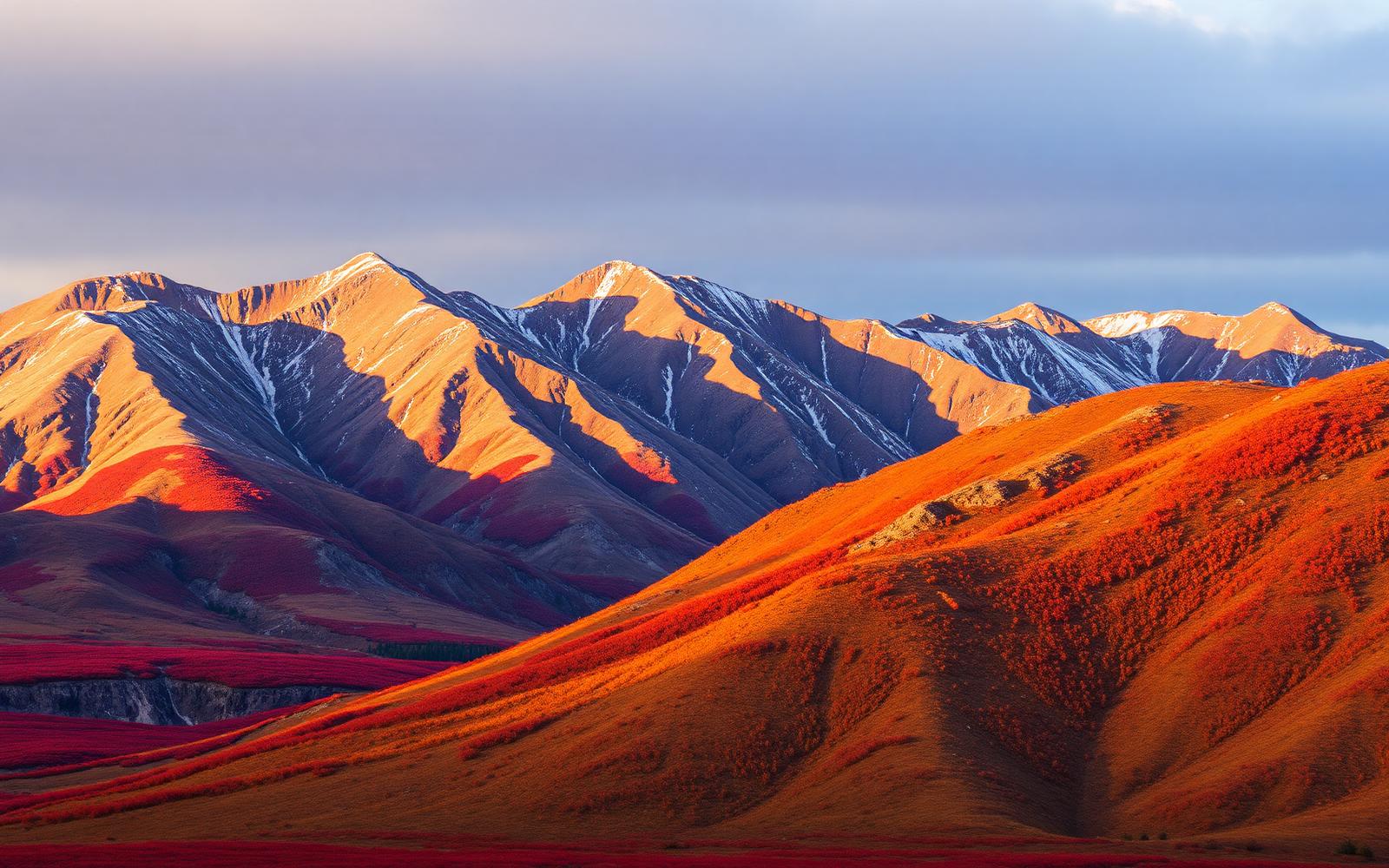
Above tree line in the Arctic — tundra ridges, autumn reds, and a filming window that runs straight into deep winter.
Northwest Territories, Canada
Where on earth
Satellite imagery flying in from a world view to Richardson Mountains, Northwest Territories, Canada.
- Biome
- Arctic tundra / subarctic transition
- Latitude
- ~67° N
- Winter lows
- -35 to -45 °C
- Key food
- Ptarmigan, hare, caribou, char
- Big predators
- Grizzly, wolf, wolverine
The country
The Richardson Mountains straddle the Yukon–NWT border, running north above tree line into the Arctic. Vegetation drops to dwarf birch, willow, lichen, and moss; the ridges are tundra rock and wind. The palette in autumn is a red-and-gold shock; the winter that follows is very serious.
Why the show came here
Season 13 is the show's hardest environment yet — a genuine tundra season with almost no useful timber and a filming window that pushes participants deep into winter. Success here is a question of shelter thermodynamics and pre-freeze-up food caching.
Planner-relevant notes
Snow is a building material, not a nuisance. Plan for quinzhee or snow-block shelter as your winter home, not a stopgap. Fuel is measured in twigs; a wood stove concept doesn't work — think small, hot, sheltered fires.
Field notes
- Wind chill drives frostbite before ambient temperature does — face cover matters.
- Ptarmigan flocks are the fastest tundra protein — plan for close shots.
- Cache food inside your shelter footprint; wolverines will find anything else.