


Beyond Alone · Best: Jul – Sep
Kamchatka Peninsula
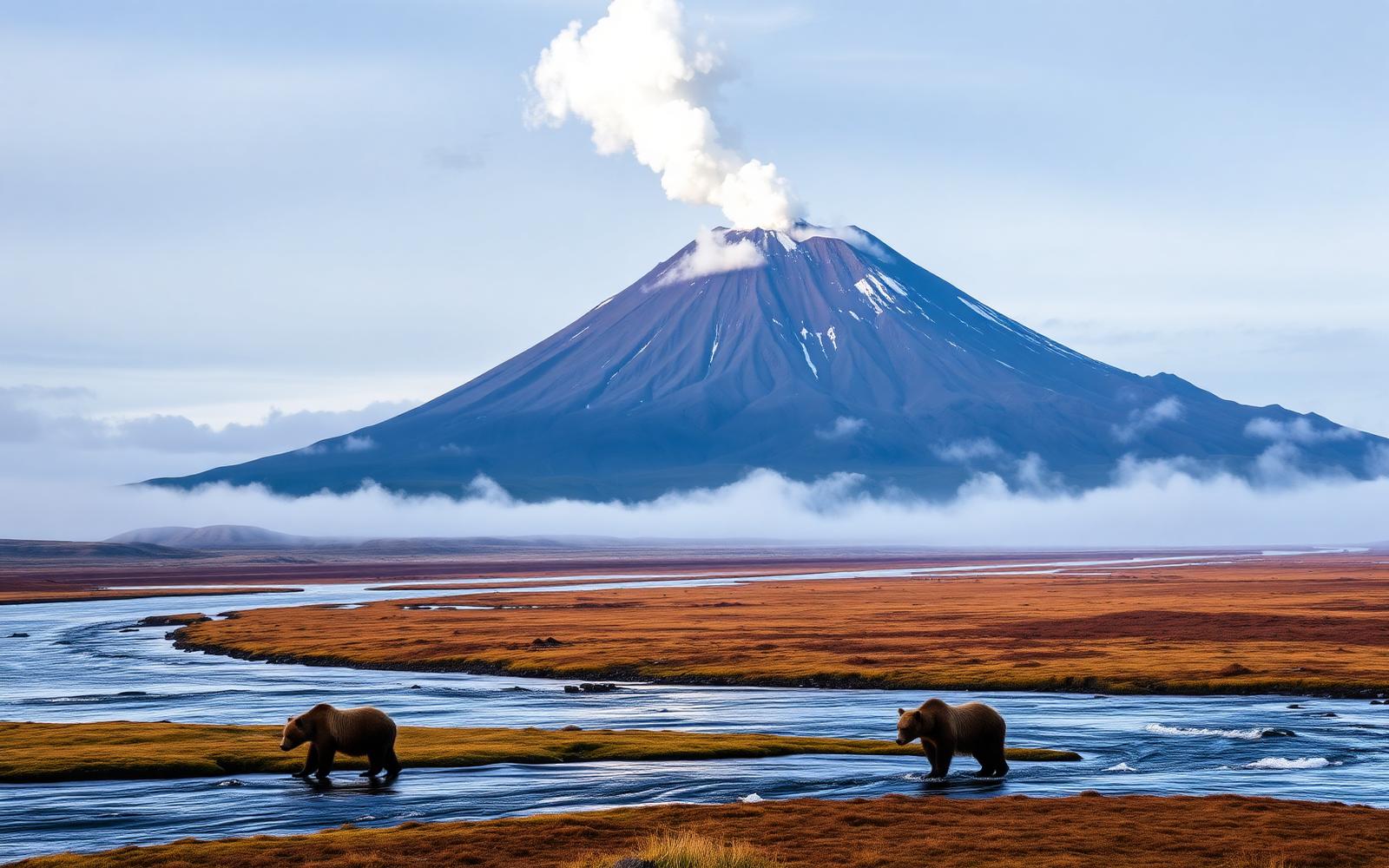
300 volcanoes, brown bear density unmatched anywhere on Earth, and untouched Pacific wilderness.
Russian Far East
Where on earth
Satellite imagery flying in from a world view to Kamchatka Peninsula, Russian Far East.
- Biome
- Sub-arctic volcanic peninsula
- Elevation
- 0 – 4,750 m (Klyuchevskaya)
- Best window
- Jul – Sep
- Key draws
- Klyuchevskaya, Valley of Geysers, Kuril Lake bears
- Watch for
- Brown bear (highest density on Earth), logistics
The country
A UNESCO-listed peninsula in Russia's Far East — active volcanoes, hot springs, wild rivers full of salmon, and effectively no roads once you leave Petropavlovsk.
Why enthusiasts come
Volcano climbs (Klyuchevskaya, Tolbachik), bear-viewing at Kuril Lake, and the Valley of Geysers. Every trip is helicopter- or 6WD-supported.
Planner-relevant notes
Independent travel is legally difficult — go with a licensed Russian operator. Access has been restricted for foreign nationals in recent years; check current status.
Field notes
- Bear density means never traveling alone — group + noise discipline.
- Volcanic gas hazard on active summits — respect ranger closures.
- All-weather kit even in July — sub-Arctic latitudes with maritime storms.
Frequently asked about Kamchatka Peninsula
- Where is Kamchatka Peninsula?
- Kamchatka Peninsula is in Russian Far East. 300 volcanoes, brown bear density unmatched anywhere on Earth, and untouched Pacific wilderness.
- What is the climate like at Kamchatka Peninsula?
- Sub-arctic volcanic peninsula. A UNESCO-listed peninsula in Russia's Far East — active volcanoes, hot springs, wild rivers full of salmon, and effectively no roads once you leave Petropavlovsk.