


Beyond Alone · Best: Jul – Aug (eagle festival Oct)
Altai Mountains
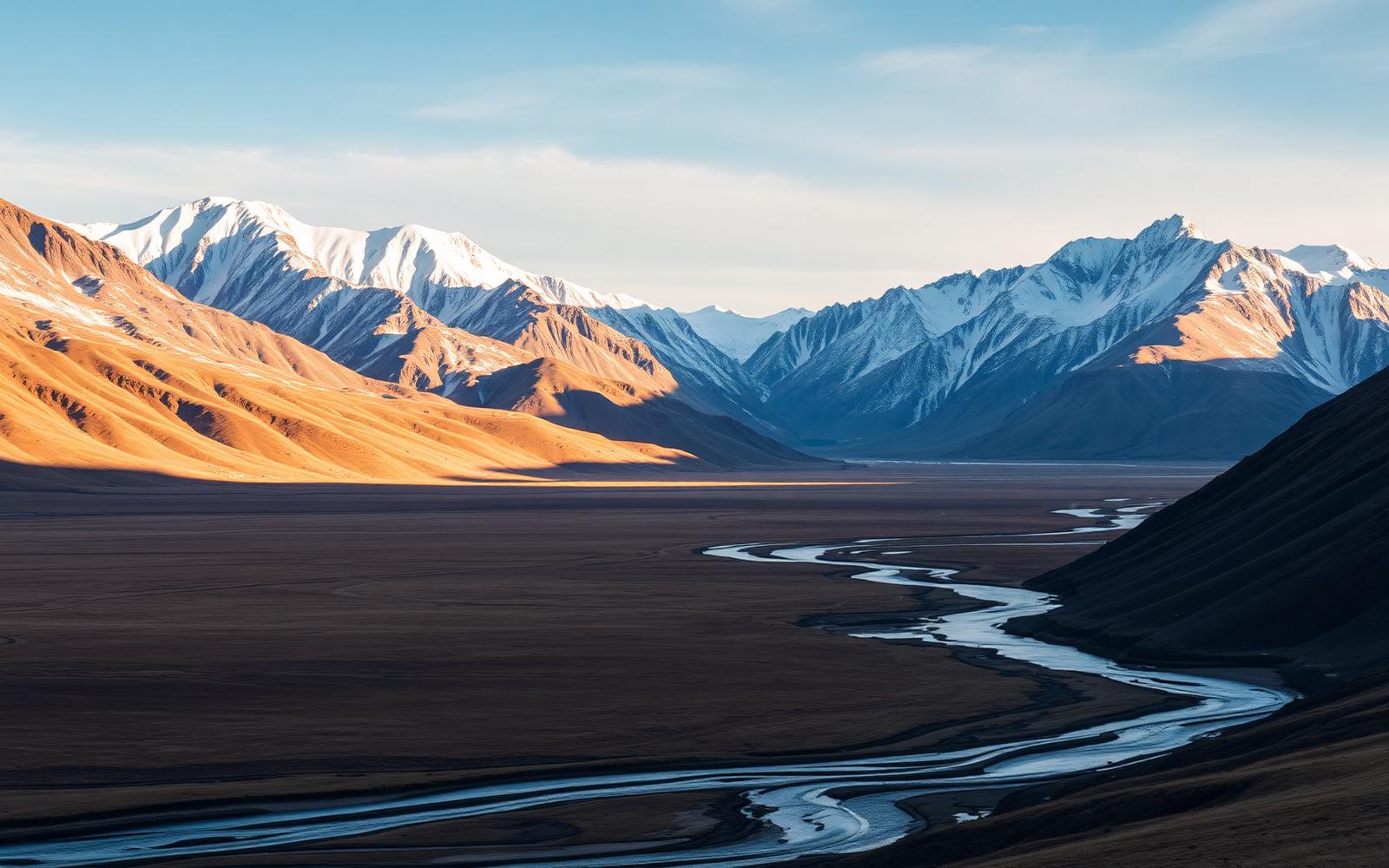
Kazakh eagle hunters, glaciated peaks, and horseback traverses at the Russian/Kazakh/Chinese corner.
Western Mongolia
Where on earth
Satellite imagery flying in from a world view to Altai Mountains, Western Mongolia.
- Biome
- Central Asian mountain steppe + alpine
- Elevation
- 1,700 – 4,374 m (Khüiten)
- Best window
- Jul – Aug
- Key draws
- Tavan Bogd, eagle festival, Potanin Glacier
- Watch for
- Extreme weather swings, remoteness
The country
Western Mongolia's Bayan-Ölgii province is largely Kazakh, home to the world's remaining traditional eagle hunters. Beyond Ölgii, the Tavan Bogd (Five Saints) massif holds Mongolia's tallest peaks.
Why enthusiasts come
Horseback and foot traverses to Tavan Bogd base camp, with side-trip mountaineering on Malchin Peak. The eagle festival in October is a genuine cultural event, not a tourist show.
Planner-relevant notes
Border-zone permits required — arrange through local operators in Ölgii. Weather can drop from 25°C to sub-freezing in a day at altitude.
Field notes
- Local ger-stay etiquette is real; guides brief you before entering.
- Cash economy above Ölgii — bring Mongolian tögrög.
- Comms are satellite-only above 3,000 m.
Frequently asked about Altai Mountains
- Where is Altai Mountains?
- Altai Mountains is in Western Mongolia. Kazakh eagle hunters, glaciated peaks, and horseback traverses at the Russian/Kazakh/Chinese corner.
- What is the climate like at Altai Mountains?
- Central Asian mountain steppe + alpine. Western Mongolia's Bayan-Ölgii province is largely Kazakh, home to the world's remaining traditional eagle hunters. Beyond Ölgii, the Tavan Bogd (Five Saints) massif holds Mongolia's tallest peaks.