
Skip to content

Global Regional Plant Guides

Australian Arid Interior & Desert Ranges Plant Survival Guide

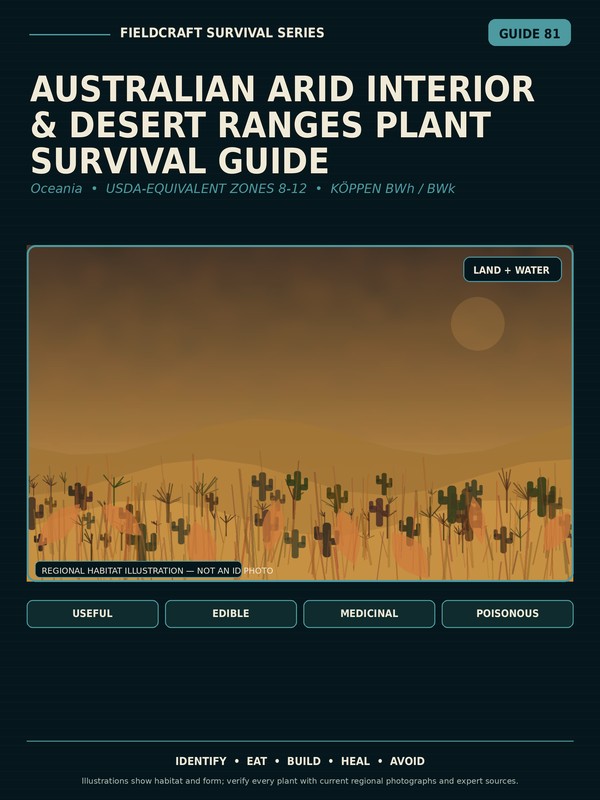
A comprehensive survival plant guide for Australian Arid Interior & Desert Ranges, covering useful woody materials, land foods, aquatic foods, traditional-use plants and poisonous look-alikes.

Cover of Australian Arid Interior & Desert Ranges Plant Survival Guide
Continent
Oceania
USDA-equivalent zones
8-12
Köppen climate
BWh / BWk
Profiles
20
Regional biome
Spinifex plain, mulga woodland, rocky range and ephemeral creek
Download PDF (17 pages)

Print-ready · US Letter · clickable sources

Useful plants · 5Land edibles · 5Aquatic edibles · 3Traditional-use · 3Poisonous look-alikes · 4

Useful plants

Wood, fibre, shelter and craft

Mulga

Acacia aneura

Useful plants
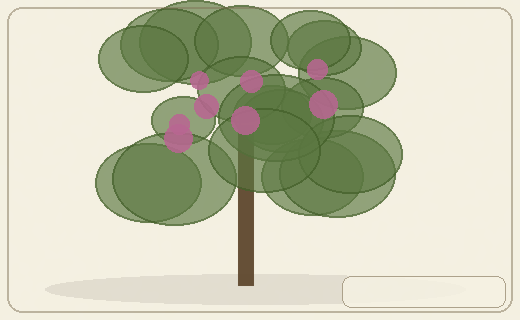
Stylized form diagram for Mulga
Identify
Narrow gray-green phyllodes, rough dark bark, yellow flower spikes and flat pods.
Habitat
Australian arid interior, hardpan plains and desert ranges.
Season
Seeds seasonal; wood year-round.
Field use
Dense wood for bows, spear throwers, digging sticks, handles and hot coals; seeds have documented food use after correct processing.
Caution
Many wattles have toxic seeds. Positive species identification and traditional preparation are essential.
Look-alikes
Other Acacia species differ in phyllode shape, glands and pod form.
bow woodtoolsfuelfood seed
Eucalypts

Eucalyptus / Corymbia spp.

Useful plants
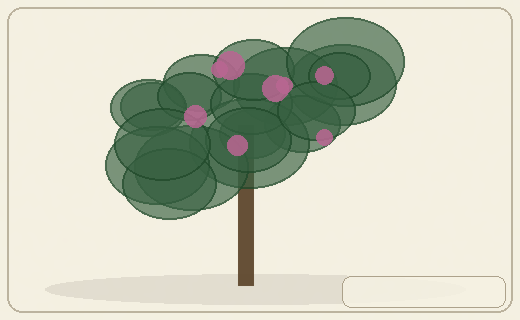
Stylized form diagram for Eucalypts
Identify
Oil-dotted aromatic leaves; bark may be smooth, fibrous, stringy or flaky; woody capsule “gumnuts.”
Habitat
Australian forests, woodland and savanna; planted worldwide.
Season
Wood and bark year-round; flowers seasonal.
Field use
Hard wood for bows, spear shafts, handles and fuel; shedding bark can be tinder; hollow limbs may hold water only after careful inspection.
Caution
Many species are extremely hard and split dangerously. Oils and leaves are not food; fire behavior is intense.
Look-alikes
Melaleuca has papery bark and bottlebrush flowers.
bow woodspearhandlesfueltinder

She-oaks / casuarinas

Casuarina / Allocasuarina spp.

Useful plants
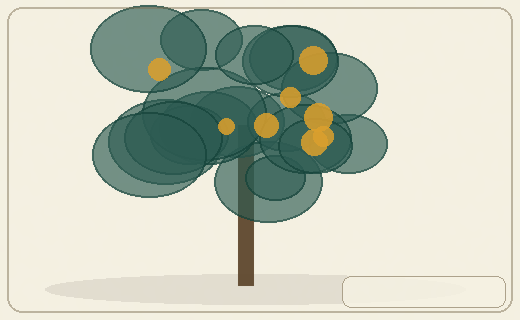
Stylized form diagram for She-oaks / casuarinas
Identify
Fine jointed needle-like branchlets; tiny scale leaves at joints; woody cone-like fruits; furrowed bark.
Habitat
Australian coast, woodland, riverbanks and Pacific shores.
Season
Wood year-round; seeds seasonal.
Field use
Dense wood for spear shafts, clubs, handles, bows and excellent coals; fine dry branchlets are tinder.
Caution
Heavy limbs fall in wind. Do not confuse branchlets with edible Ephedra.
Look-alikes
Tamarisk has finer feathery twigs and pink flowers, not woody cones.
bow woodspearhandlesfueltinder

Grass trees

Xanthorrhoea spp.

Useful plants
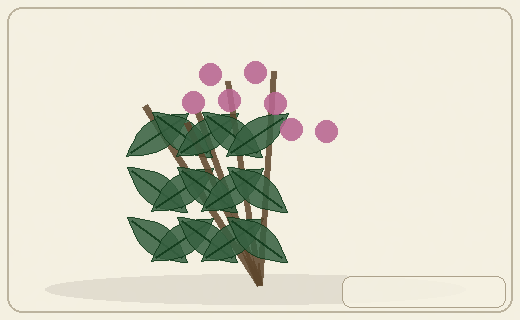
Stylized form diagram for Grass trees
Identify
Dense crown of long narrow leaves above a blackened trunk; tall spear-like flower spike.
Habitat
Australian heath, sclerophyll forest and dry woodland.
Season
Leaves year-round; flower spike seasonal.
Field use
Leaf bases and resin have adhesive and fire-lighting uses; dead flower stalks make friction-fire spindles and spear shafts.
Caution
Plants are extremely slow-growing and often protected. Resin and smoke can irritate.
Look-alikes
Yucca has softer trunk forms and bell flowers; grass trees have tiny flowers on a dense spear.
adhesivetinderbow drill spindlespear

Temperate wattles

Acacia dealbata / A. melanoxylon group

Useful plants
Stylized form diagram for Temperate wattles
Identify
Flattened phyllodes or feathery leaves; yellow puffball flowers; pods; often dark hard wood.
Habitat
Australian temperate forest, heath and river valleys.
Season
Seeds seasonal; wood year-round.
Field use
Selected seeds are documented food after processing; blackwood and related species make bows, tools, handles and fuel.
Caution
Seed edibility varies widely and some wattles contain toxic compounds.
Look-alikes
Non-native acacias and bipinnate legumes require close pod and gland comparison.
food seedbow woodhandlesfuel

Land edibles

Terrestrial food species

Quandong

Santalum acuminatum

Land-based edible plants
Stylized form diagram for Quandong
Identify
Narrow gray-green leaves; bright red round fruit with one deeply pitted stone; root-parasitic shrub.
Habitat
Australian arid and semi-arid woodland.
Season
Fruit seasonal.
Field use
Ripe fruit flesh is documented food; hard pitted stones can be crafted and kernels have specialized traditional uses.
Caution
Kernel use requires expert preparation. Do not uproot this root-parasitic plant.
Look-alikes
Other Santalum fruits vary in color and edibility.
food fruitcraft

Common purslane

Portulaca oleracea

Land-based edible plants
Stylized form diagram for Common purslane
Identify
Low reddish succulent stems; smooth fleshy leaves; tiny yellow flowers; clear sap.
Habitat
Disturbed warm ground, gardens, river deposits and camp edges worldwide.
Season
Warm growing season.
Field use
Young leaves and stems are documented food and water-rich greens.
Caution
High oxalate content; avoid large amounts with kidney disease and avoid contaminated ground.
Look-alikes
Spurges often exude milky sap and are unsafe.
food green

Saltbushes

Atriplex spp.

Land-based edible plants
Stylized form diagram for Saltbushes
Identify
Gray or mealy alternate leaves; inconspicuous flowers; often salt-tolerant and sprawling.
Habitat
Deserts, salt flats, coasts and disturbed dry ground.
Season
Leaves most of year.
Field use
Leaves of selected species are documented cooked greens; stems can fuel small fires and brush shelters.
Caution
High salt and oxalate content makes this a small-portion food, especially when dehydrated or kidney-impaired.
Look-alikes
Many gray desert shrubs resemble saltbush; fruiting bracts help confirm.
food greenfuelbrush

Prickly pears

Opuntia spp.

Land-based edible plants
Stylized form diagram for Prickly pears
Identify
Flattened pads with clusters of fine glochids and often spines; showy flowers; fleshy fruits.
Habitat
Dry Americas, disturbed warm regions and some Mediterranean/African landscapes.
Season
Fruit summer-fall; young pads seasonal.
Field use
Ripe fruit and properly de-spined young pads of confirmed species are documented foods; dry woody joints can support fuel.
Caution
Invisible glochids embed in skin, eyes and mouth. Some fruits are insipid or seedy; avoid sprayed invasive stands.
Look-alikes
Chollas have cylindrical joints.
food fruitfood padfuel

Pigface

Carpobrotus rossii and related spp.

Land-based edible plants
Stylized form diagram for Pigface
Identify
Ground-hugging succulent with triangular leaves, large daisy-like flowers and fleshy fig-like fruit.
Habitat
Australian and southern African coasts, dunes and salt spray zones.
Season
Fruit seasonal; leaves year-round.
Field use
Ripe fruit and selected leaf preparations are documented food; leaves provide moisture and have external traditional use.
Caution
Very salty or sour tissues can upset stomach. Avoid polluted beaches and hybrid plants.
Look-alikes
Other iceplants are smaller and may not share food traditions.
food fruitfood greenmedicine

Aquatic edibles

Water-margin food species

Cumbungi / Australian cattails

Typha domingensis / T. orientalis

Water and wetland edible plants
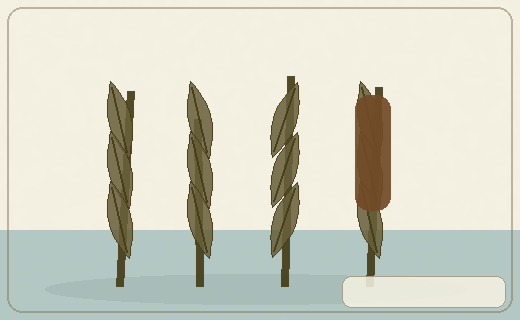
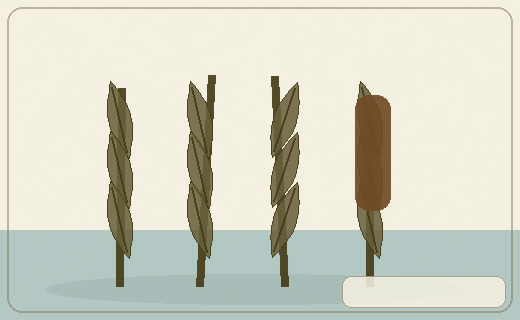
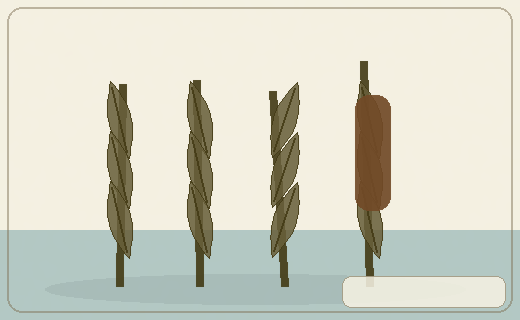
Stylized form diagram for Cumbungi / Australian cattails
Identify
Tall flat leaves and brown cylindrical flower spikes.
Habitat
Australian wetlands, billabongs and slow rivers.
Season
Shoots and pollen seasonal; rhizomes longer.
Field use
Young shoots, pollen and processed rhizome starch have documented food use; leaves make mats and tinder.
Caution
Wetland contamination and crocodile habitat are serious.
Look-alikes
Yellow flag iris lacks the brown cylinder and is toxic.
food shootfood starchbasketrytinder

Water ribbons

Triglochin procera complex

Water and wetland edible plants
Stylized form diagram for Water ribbons
Identify
Long ribbon leaves in freshwater; flower stalks with many small green flowers; underground tubers.
Habitat
Australian freshwater lakes, swamps and slow rivers.
Season
Tubers and leaf bases seasonal.
Field use
Tubers and tender parts have documented Aboriginal food use after appropriate cooking.
Caution
Taxonomy is complex and wetland contamination matters. Do not confuse with toxic arrowgrass relatives.
Look-alikes
Other Triglochin species may contain cyanogenic compounds.
food tuber

Bulrushes

Schoenoplectus spp.

Water and wetland edible plants
Stylized form diagram for Bulrushes
Identify
Round or triangular mostly leafless stems; small brown flower clusters near stem tips.
Habitat
Freshwater and brackish marshes, pond edges and slow rivers.
Season
Young shoots spring; rhizomes and stems longer.
Field use
Rhizomes and young shoots have documented food use after correct species identification; stems make mats, cordage and basket frames.
Caution
Wetland contamination is a major risk. Several sedges are difficult to separate.
Look-alikes
Cattails have broad flat leaves and a brown cylinder.
food shootfood starchbasketrycordage

Traditional-use

Documented traditional medicine

Tea trees

Melaleuca alternifolia and related spp.

Medicinal and traditional-use plants
Stylized form diagram for Tea trees
Identify
Narrow oil-dotted leaves; papery bark; white flower spikes; small woody capsules.
Habitat
Australian wetlands and stream flats.
Season
Leaves and bark year-round.
Field use
Papery bark is tinder and wrapping; leaves have documented external traditional uses and commercial oil production.
Caution
Essential oil is toxic if swallowed and can burn skin undiluted.
Look-alikes
Other Melaleuca species vary; not all oils have the same chemistry.
tinderwrapmedicine

Yarrow

Achillea millefolium

Medicinal and traditional-use plants
Stylized form diagram for Yarrow
Identify
Aromatic finely divided leaves; flat clusters of small white to pink flower heads.
Habitat
Dry openings, trails, grassland, shore gravel and disturbed soil.
Season
Summer through fall.
Field use
Documented traditional external uses include washes and aromatic preparations; dry flower heads make light tinder.
Caution
Possible allergy, pregnancy and anticoagulant concerns. Not a substitute for wound cleaning or medical care.
Look-alikes
Poison hemlock is much taller with hollow purple-spotted stems and true umbels.
medicinetinder

Ephedra / jointfir

Ephedra spp.

Medicinal and traditional-use plants
Stylized form diagram for Ephedra / jointfir
Identify
Green jointed nearly leafless stems; small cone-like reproductive structures; woody base.
Habitat
Asian, American and Mediterranean deserts and steppe.
Season
Stems year-round.
Field use
Straight jointed stems make light tinder and have documented traditional medicinal history.
Caution
Ephedrine-type alkaloids can cause dangerous heart, blood pressure and drug effects. No self-dosing.
Look-alikes
Casuarina is a tree with many fine drooping branchlets and woody cones.
tindermedicine

Poisonous look-alikes

Do not eat — verify before harvest

Australian cycads

Macrozamia / Cycas spp.

Poisonous plants
Stylized form diagram for Australian cycads
Identify
Crown of stiff pinnate leaves; exposed cones or large seeds; stout trunk or underground stem.
Habitat
Australian forest, woodland and desert ranges.
Season
Seeds seasonal.
Field use
No survival food use in this guide. Leaves have limited thatch value.
Caution
Seeds and tissues contain powerful toxins. Traditional detoxification is complex and failure can be fatal or neurotoxic.
Look-alikes
True palms have flowers and enclosed fruits, not cycad cones.
poison

Native tobacco

Nicotiana spp.

Poisonous plants
Stylized form diagram for Native tobacco
Identify
Sticky or gray-green leaves; tubular flowers; capsules with many tiny seeds.
Habitat
Australian arid and disturbed ground; also worldwide tobacco relatives.
Season
Growing season.
Field use
No food or field medicine use.
Caution
Nicotine and related alkaloids can cause vomiting, seizures, breathing failure and death.
Look-alikes
Some edible greens have similar soft leaves but lack tubular flowers.
poison

Daturas / thorn apples

Datura spp.

Poisonous plants
Stylized form diagram for Daturas / thorn apples
Identify
Large foul-smelling leaves; upright trumpet flowers; spiny egg-shaped capsules.
Habitat
Disturbed warm ground, dry riverbeds and fields worldwide.
Season
Summer-fall.
Field use
No use.
Caution
All parts contain dangerous tropane alkaloids causing delirium, overheating, seizures and death.
Look-alikes
Brugmansia has hanging trumpets on woody shrubs and is also toxic.
poison

Oleander

Nerium oleander

Poisonous plants
Stylized form diagram for Oleander
Identify
Evergreen shrub with narrow leathery leaves in pairs or whorls and pink, white or red five-petaled flowers.
Habitat
Mediterranean and arid-region waterways, wadis and planted settlements.
Season
Year-round foliage.
Field use
No use.
Caution
All parts contain potent cardiac glycosides; smoke, skewers and contaminated water can be dangerous.
Look-alikes
Yellow oleander has different fruit but similar cardiac toxicity.
poison