


Beyond Alone · Best: Jul – Sep (coast year-round)
Olympic National Park
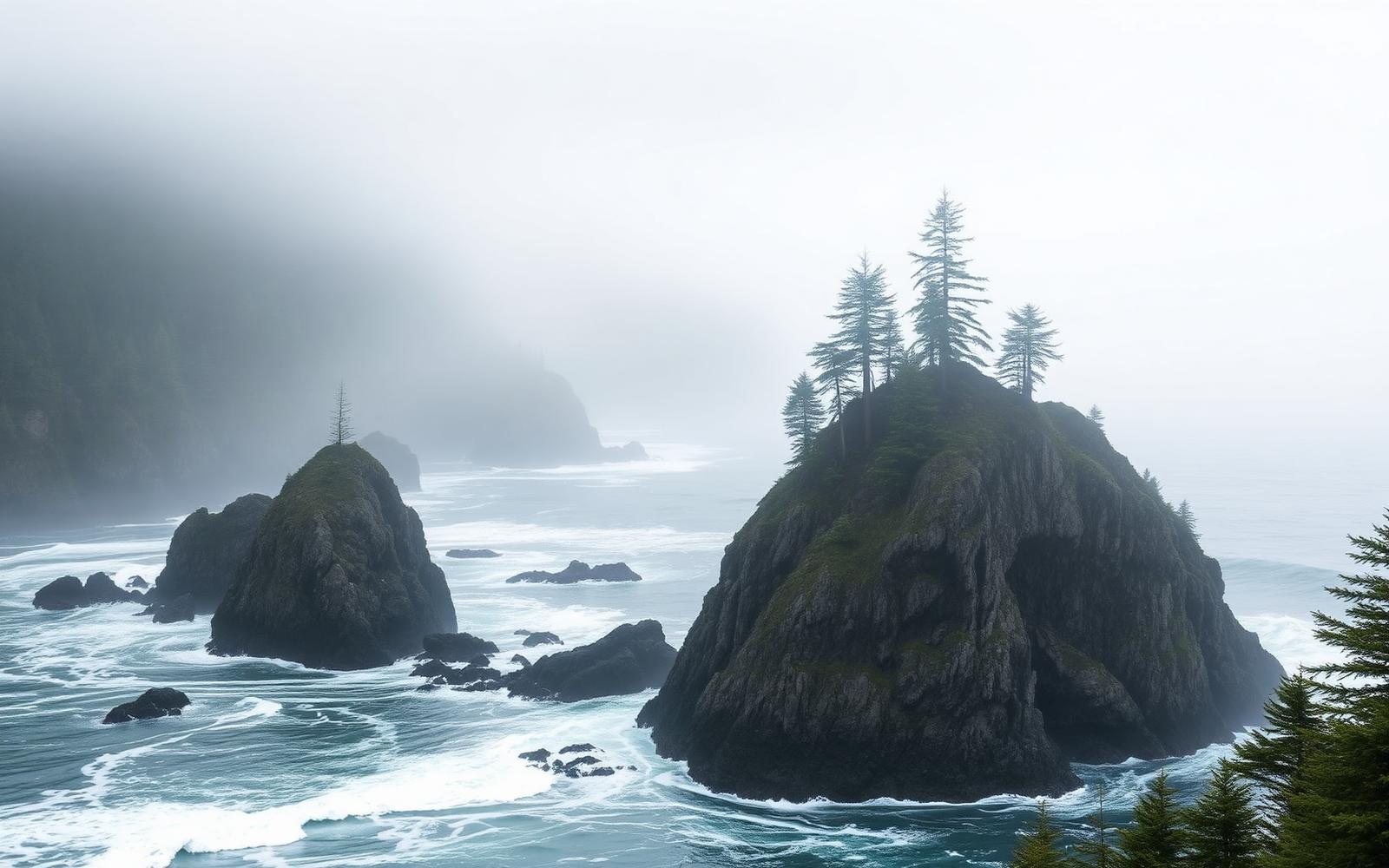
Three biomes in one park — Pacific coast, temperate rainforest, and glaciated peaks.
Washington, USA
Where on earth
Satellite imagery flying in from a world view to Olympic National Park, Washington, USA.
- Biome
- Temperate rainforest, alpine, Pacific coast
- Elevation
- 0 – 2,428 m
- Best window
- Jul – Sep (dryest window)
- Key draws
- Wilderness Coast, High Divide, Enchanted Valley
- Watch for
- Bear, cougar, tide windows
The country
The Olympics sit isolated from the Cascades and get direct Pacific weather. Rainforest below the passes, cold alpine above, and a wilderness coastline with headland traverses only passable at low tide.
Why enthusiasts come
You can plan a trip that starts in old-growth cedar, crosses a glaciated pass, and ends on a fog-bound beach — few places on Earth stack that much biome per mile.
Planner-relevant notes
Coastal routes require a tide table and headland-timing chart. Rope-assisted rope traverses exist on the Wilderness Coast. Bear canisters required in most backcountry zones.
Field notes
- Fixed lines on coastal headlands are maintained — inspect knots but trust the anchors.
- Hoh rainforest slugs on gear are cosmetic, not damage — brush off at breaks.
- High Divide can hold snow into late July; check the ranger board.
Frequently asked about Olympic National Park
- Where is Olympic National Park?
- Olympic National Park is in Washington, USA. Three biomes in one park — Pacific coast, temperate rainforest, and glaciated peaks.
- What is the climate like at Olympic National Park?
- Temperate rainforest, alpine, Pacific coast. The Olympics sit isolated from the Cascades and get direct Pacific weather. Rainforest below the passes, cold alpine above, and a wilderness coastline with headland traverses only passable at low tide.