

Alone Australia · Alone Australia — Season 3
Lake Burbury
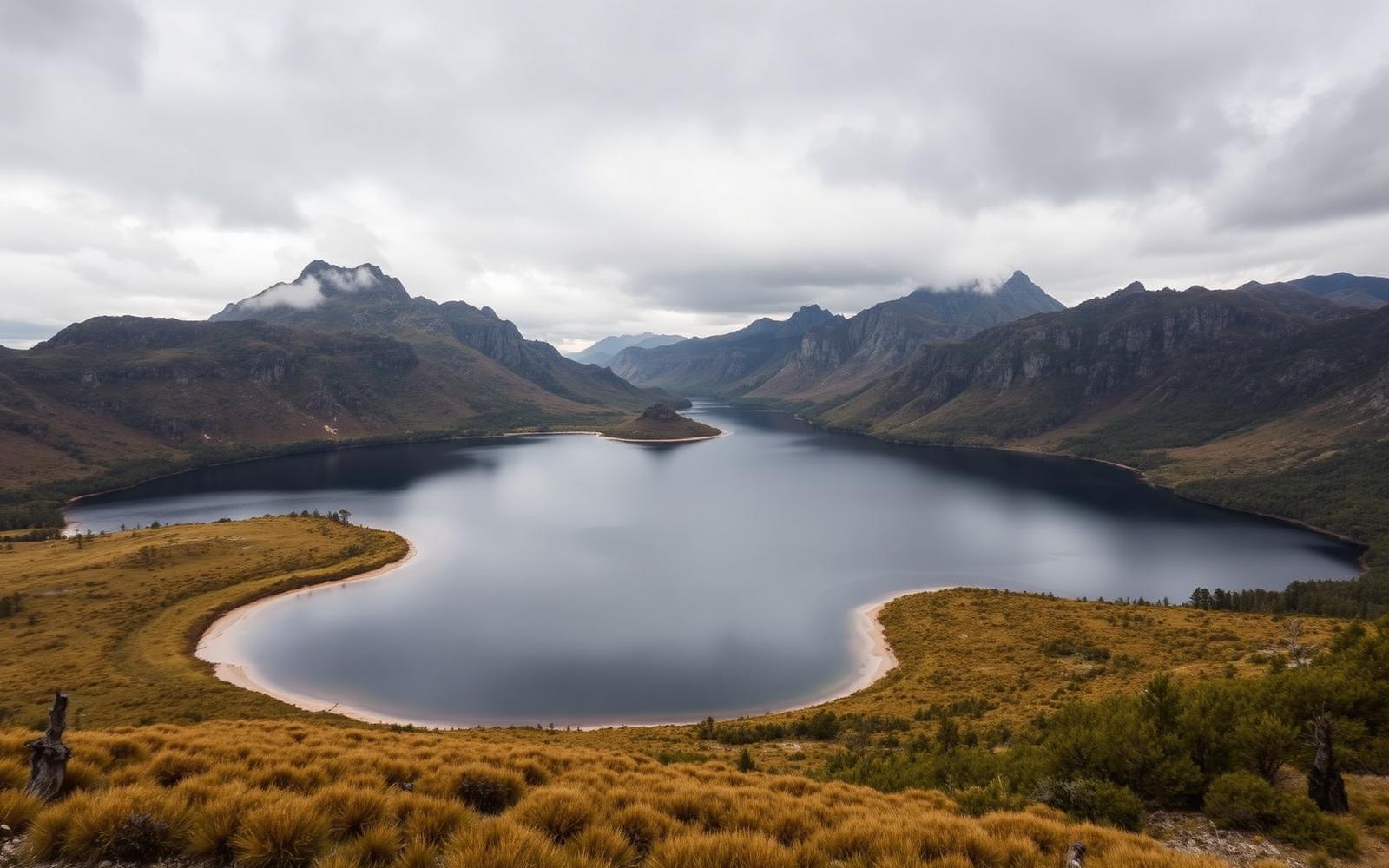
Mountain lake on the West Coast Range — buttongrass plains, eucalypt forest, and quartzite peaks under fast weather.
West Coast Range, Tasmania, Australia
Where on earth
Satellite imagery flying in from a world view to Lake Burbury, West Coast Range, Tasmania, Australia.
- Biome
- Sub-alpine / temperate lake
- Elevation
- ~140 m (surrounded by 1,000+ m peaks)
- Winter lows
- -2 to 4 °C
- Key food
- Trout, eel, possum, wallaby
- Big predators
- None (Tasmanian devil, quoll)
The country
Lake Burbury sits inside Tasmania's West Coast Range — a mosaic of buttongrass moorland, eucalypt forest, and steep quartzite peaks. Weather is fast and wet, but drier than the South West rainforest sites, and the lake itself gives Season 3 a shore-based food strategy.
Why the show came here
It kept Alone Australia in a workable Tasmanian filming footprint while shifting the environment: less rainforest, more lake and moorland. Trout fishing is realistic and produces sustainable protein for a well-set participant.
Planner-relevant notes
Wind off the lake is the shelter design driver. Buttongrass makes bad thatch but good insulation packing. Fire discipline in dry buttongrass country is a serious safety issue — even in cold weather.
Field notes
- Test every shelter for lake-driven side wind before you commit.
- Trout set-lines run overnight beat active fishing for calorie return.
- Never burn buttongrass in wind — bushfire risk is real even in winter.