

Alone (US) · Seasons 5 & 6
Great Slave Lake
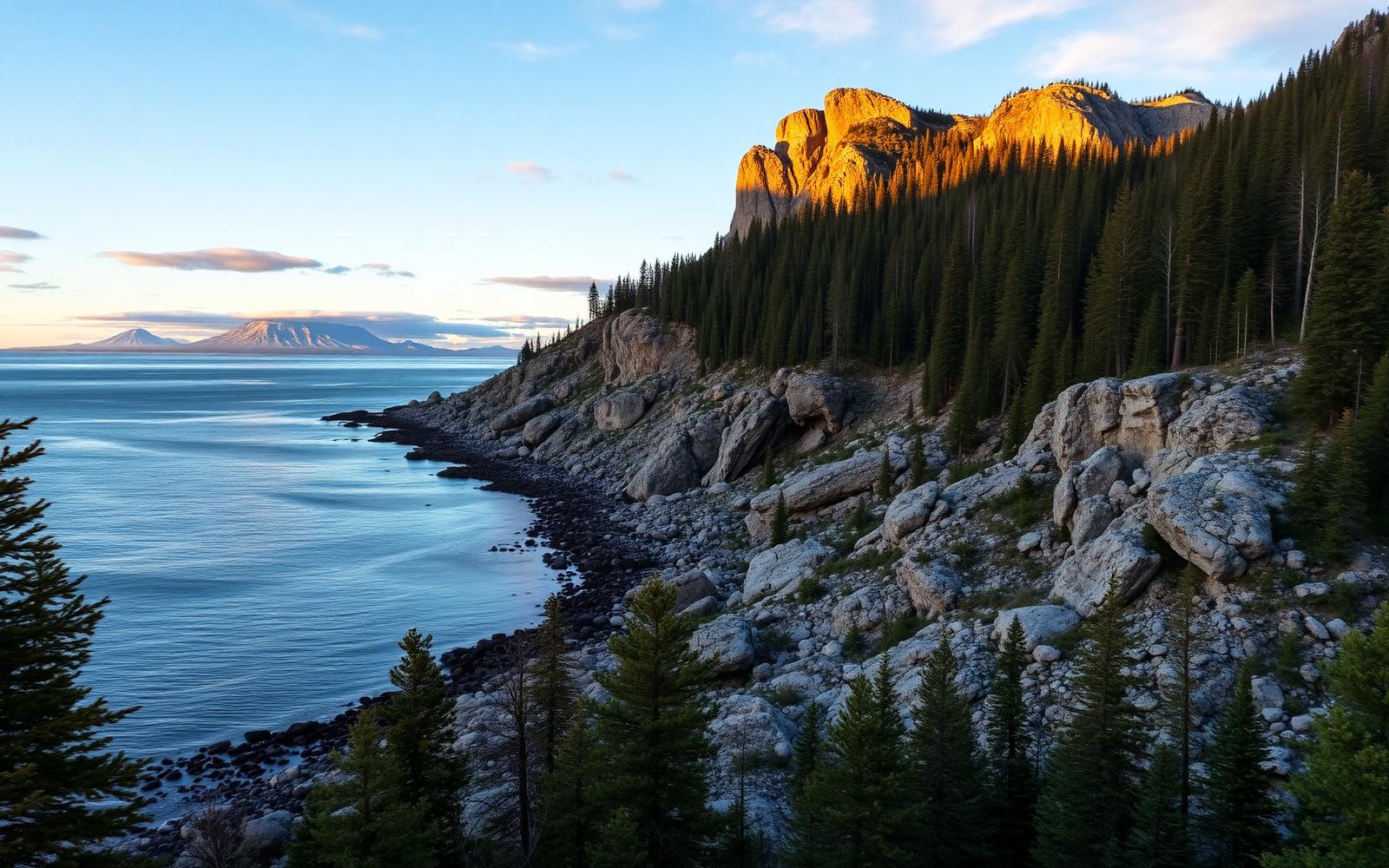
Subarctic Canadian Shield — boreal forest, granite shoreline, and a lake big enough to make its own weather.
Northwest Territories, Canada
Where on earth
Satellite imagery flying in from a world view to Great Slave Lake, Northwest Territories, Canada.
- Biome
- Subarctic boreal / Canadian Shield
- Lake size
- 27,200 km² (10th largest on Earth)
- Winter lows
- -30 to -40 °C
- Key food
- Lake trout, pike, moose
- Big predators
- Black bear, wolf, wolverine
The country
Great Slave sits on the northern edge of the Canadian Shield — thin soil over ancient granite, tight boreal forest of black spruce and jack pine, and a lake so big it behaves like a small sea. Winters are brutal, summers are short and buggy, and everything about how you camp bends to the water.
Why the show came here
Two back-to-back seasons for a reason: reliable fish (trout, pike, whitefish), workable timber, and a filming window that lets producers push participants toward the winter transition — the point where cold, not calories, decides who stays.
Planner-relevant notes
Freeze-up timing rules everything. Build a shelter you can insulate as the temperature drops, not just one that sheds fall rain. A reliable open-water fishing setup + a plan for hard-water fishing after freeze-up outperforms any single loadout choice.
Field notes
- Onshore winds on this lake are dangerous — plan a bail-out camp above high water.
- Wolverine sign near your cache means the cache is already lost.
- Ice safety: 10 cm clear black ice supports a person, 15 cm for groups.